信息网络安全 ›› 2025, Vol. 25 ›› Issue (12): 1827-1846.doi: 10.3969/j.issn.1671-1122.2025.12.001
语义通信安全:多层威胁与对策
金志刚( ), 罗厚阳, 刘泽培, 丁禹
- 天津大学电气自动化与信息工程学院,天津 300072
-
收稿日期:2025-11-08出版日期:2025-12-10发布日期:2026-01-06 -
通讯作者:金志刚 E-mail:zgjin@tju.edu.cn -
作者简介:金志刚(1972—),男,上海,教授,博士,主要研究方向为无线网络、网络安全|罗厚阳(2001—),男,天津,硕士研究生,主要研究方向为无线通信、语义通信安全|刘泽培(1998—),男,天津,博士研究生,主要研究方向为物联网安全、联邦学习|丁禹(2001—),男,四川,硕士研究生,主要研究方向为入侵检测、联邦学习 -
基金资助:国家自然科学基金(52171337)
Semantic Communication Security: Multi-Layered Threats and Countermeasures
JIN Zhigang(), LUO Houyang, LIU Zepei, DING Yu
- School of Electrical and Information Engineering, Tianjin University, Tianjin 300072, China
-
Received:2025-11-08Online:2025-12-10Published:2026-01-06 -
Contact:JIN Zhigang E-mail:zgjin@tju.edu.cn

摘要:
语义通信作为下一代通信技术的重要方向,通过聚焦信息内容的含义与效用,显著提升了通信效率并展现出从模态传输向知识驱动演进的巨大潜力。然而,随着系统对共享知识库与深度学习模型的依赖加深,其安全边界已从传统的比特层拓展至认知层,面临着跨层耦合与多模态投毒等新型威胁。文章通过系统回顾国内外近三年间的相关文献,构建了“数据隐私-模型内生-传输物理-知识认知”的四维安全分类架构,全面剖析了语义通信在对抗性环境下的脆弱性机理。文章重点探讨了知识图谱结构化投毒、推理链操纵等高阶认知威胁,并系统评估了基于认知免疫、动态信任图及量子赋能的防御技术。此外,文章结合物联网与车联网典型场景,分析了轻量化与抗干扰安全机制的实际部署挑战。最后,文章提出了内生认知安全、零信任语义架构及跨域融合防御等未来研究方向,旨在为构建安全、可信、鲁棒的6G语义通信体系提供理论支撑与技术指引。
中图分类号:
引用本文
金志刚, 罗厚阳, 刘泽培, 丁禹. 语义通信安全:多层威胁与对策[J]. 信息网络安全, 2025, 25(12): 1827-1846.
JIN Zhigang, LUO Houyang, LIU Zepei, DING Yu. Semantic Communication Security: Multi-Layered Threats and Countermeasures[J]. Netinfo Security, 2025, 25(12): 1827-1846.

图1
知识库使能的语义通信架构

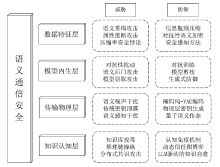
图2
语义通信安全威胁与防御
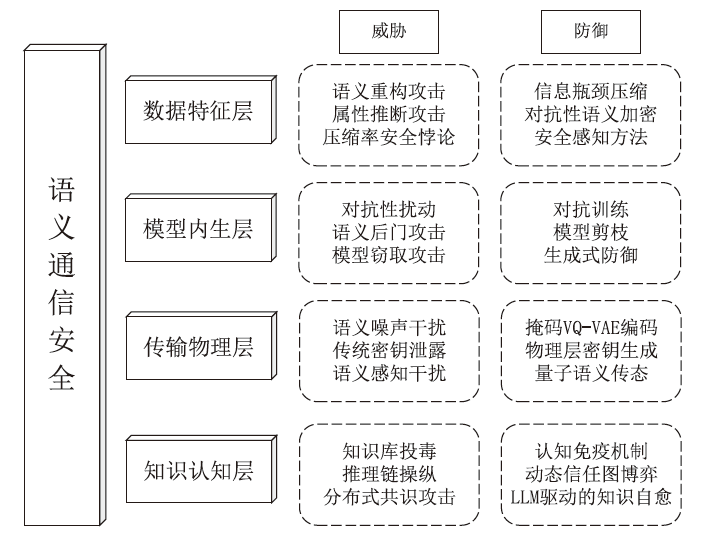
图3
基于KDPP的语义通信系统
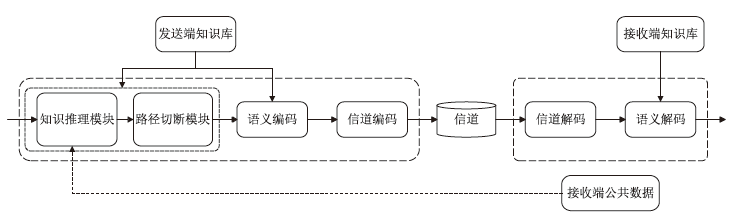
表1
主动防御代表性工作总结
| 文献 | 技术类型 | 要点 | 主要指标与结论 | |
|---|---|---|---|---|
| 攻击 | 防御 | |||
| 文献[ | √ | √ | 构造逆向解码器重构原始输入;在特征层注入噪声 | 无防护时重构SSIM高达0.92;加噪可压降重构 质量 |
| 文献[ | √ | √ | 建模收发双方知识差异,切断敏感推理路径 | 敏感路径泄露率降低40%+,优于传统DP方法 |
| 文献[ | √ | √ | 引入互信息变分上界,利用对抗训练最小化隐私互信息 | 攻击者重构SSIM降至0.3以下,分类精度保持92% |
| 文献[ | √ | √ | 对称密钥+神经网络加密器,对抗训练生成“语义乱码” | 合法用户几乎无损解码,窃听者重构SSIM < 0.1 |
| 文献[ | √ | √ | 引入全黑图像损失项,动态监测并压制窃听质量 | 低SNR下使窃听PSNR降低约10 dB,实现阈值触发保护 |
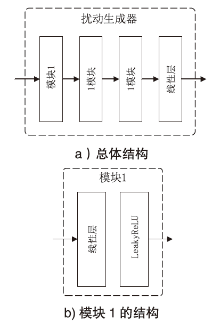
图4
SemAdv扰动生成器的结构

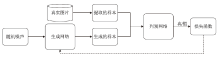
图5
生成式对抗网络基本结构

表2
模型鲁棒性与对抗防御工作总结
| 文献 | 技术类型 | 要点 | 主要指标与结论 | |
|---|---|---|---|---|
| 攻击 | 防御 | |||
| 文献[ | √ | √ | SemAdv生成物理层扰动;SemMixed联合训练 | SNR=0dB下攻击成功率降至45%;防御提升30% |
| 文献[ | √ | √ | 操纵语义符号重构;基于逆向工程清除后门 | 攻击成功率大于98%;剪枝清除率99.9%,性能损耗小于2.2% |
| 文献[ | √ | × | 联合优化数据层扰动与物理层干扰 | 低PNR(-12dB)下攻击成功率大于80%,效能提升10倍 |
| 文献[ | √ | √ | 动态Softmax温度缩放,平滑输出分布 | 替代模型攻击成功率从91%降至67% |
| 文献[ | √ | √ | 注入伪样本与误导特征,最大化反演损失 | 黑盒攻击成功率降至0%,模型效用损失小于2% |
表3
语义传输鲁棒性工作总结
| 文献 | 技术类型 | 要点 | 主要指标与结论 | |
|---|---|---|---|---|
| 攻击 | 防御 | |||
| 文献[ | √ | √ | SemMixed联合训练,物理层注入对抗样本 | 恶劣信道下鲁棒性提升30%,优于OFDM |
| 文献[ | √ | √ | 语义感知损失函数,阈值触发全黑扰动 | 低SNR下窃听PSNR降低10 dB,实现选择性保护 |
| 文献[ | √ | √ | 噪声导向掩码+码本正交化,阻断噪声传播 | -3 dB SNR下Top-1准确率大于85%,开销降至 JPEG 1% |
| 文献[ | √ | √ | 星座图对角映射+CSI相位噪声混淆 | 窃听准确率小于12%,延迟较AES降低73% |
| 文献[ | √ | √ | 量子态嵌入语义+隐形传态,利用不可克隆性 | 5比特系统解码误码率小于10%,实现无条件匿名 |
| 文献[ | √ | √ | 波分复用+动态密钥池,分级保护语义数据 | 高敏任务密钥覆盖率100%,利用率提升40% |
表4
语义认知安全工作总结
| 文献 | 技术类型 | 要点 | 主要指标与结论 | |
|---|---|---|---|---|
| 攻击 | 防御 | |||
| 文献[ | √ | √ | FGSM扰动实体嵌入;对抗训练+一致性检测 | 语义恢复错误率大于35%;防御提升15%~25% |
| 文献[ | √ | ◎ | 逻辑推理生成恶意事实,绕过异常检测 | 攻击成功率提升300%,隐蔽性强 |
| 文献[ | √ | ◎ | 子图结构权重指导删除+相似度筛选添加 | FB15K-237/WN18RR上实现最佳攻击效果 |
| 文献[ | √ | ◎ | 基于评分函数与梯度近似选择最优三元组投毒 | FB15K/WN18上MRR/Hit@10显著下降 |
| 文献[ | √ | × | 视觉毒样本注入知识库,操控检索与生成 | Top-K检索召回率大于90%,生成准确率大降 |
| 文献[ | √ | ◎ | 在KG中插入少量三元组构建误导性多跳路径 | 精确匹配率下降81%,生成错误答案带证据链 |
| 文献[ | √ | √ | 将逻辑算子结合嵌入空间进行目标/后门攻击,并提供过滤+对抗增强 | 高成功率且旁路损伤低 |
| 文献[ | √ | ◎ | DRL序贯决策增删事实优化目标推荐 | MovieLens等数据集上显著提升曝光/命中 |
| 文献[ | √ | √ | 影子模型动态优化投毒,利用聚合更新植入; LLM代理进行常识逻辑巡查与修正 | 目标攻击成功率近100%;清除95%以上逻辑投毒条目,无需人工干预 |
| 文献[ | √ | √ | 信任图维护节点信誉,动态隔离恶意节点 | 30%恶意节点下仍维持 共识 |
| [1] | ZHANG Ping, XU Wenjun, LIU Yiming, et al. Intellicise Wireless Networks From Semantic Communications: A Survey, Research Issues, and Challenges[J]. IEEE Communications Surveys & Tutorials, 2025, 27(3): 2051-2084. |
| [2] | STRINATI E C, BARBAROSSA S. 6G Networks: Beyond Shannon towards Semantic and Goal-Oriented Communications[EB/OL]. (2021-05-08)[2025-06-30]. https://arxiv.org/abs/2011.14844. |
| [3] |
GUNDUZ D, QIN Zhijin, AGUERRI I E, et al. Beyond Transmitting Bits: Context, Semantics, and Task-Oriented Communications[J]. IEEE Journal on Selected Areas in Communications, 2023, 41(1): 5-41.
doi: 10.1109/JSAC.2022.3223408 URL |
| [4] |
XU Wenjun, ZHANG Yimeng, WANG Fengyu, et al. Semantic Communication for the Internet of Vehicles: A Multiuser Cooperative Approach[J]. IEEE Vehicular Technology Magazine, 2023, 18(1): 100-109.
doi: 10.1109/MVT.2022.3227723 URL |
| [5] | WANG Yanhu, GUO Shuaishuai. Large Language Model-Based Semantic Communications: Status, Challenges, and Prospects[J]. Mobile Communications, 2024, 48(2): 16-21. |
| 王衍虎, 郭帅帅. 基于大语言模型的语义通信:现状,挑战与展望[J]. 移动通信, 2024, 48(2): 16-21. | |
| [6] |
KHAN L U, TUN Y K, ALSENWI M, et al. A Dispersed Federated Learning Framework for 6G-Enabled Autonomous Driving Cars[J]. IEEE Transactions on Network Science and Engineering, 2024, 11(6): 5656-5667.
doi: 10.1109/TNSE.2022.3188571 URL |
| [7] |
CHEN Ruxiao, GUO Shuaishuai. Look-Ahead Task Offloading for Multi-User Mobile Augmented Reality in Edge-Cloud Computing[J]. IEEE Network, 2023, 37(4): 40-46.
doi: 10.1109/MNET.001.2200593 URL |
| [8] | REN Kui, MENG Quanrun, YAN Shoukun, et al. Survey of Artificial Intelligence Data Security and Privacy Protection[J]. Chinese Journal of Network and Information Security, 2021, 7(1): 1-10. |
| 任奎, 孟泉润, 闫守琨, 等. 人工智能模型数据泄露的攻击与防御研究综述[J]. 网络与信息安全学报, 2021, 7(1): 1-10. | |
| [9] | QIN Zhijin, TAO Xiaoming, LU Jianhua, et al. Semantic Communications: Principles and Challenges[EB/OL]. (2022-06-27)[2025-06-30]. https://arxiv.org/abs/2201.01389. |
| [10] |
NAN Guoshun, LI Zhichun, ZHAI Jinli, et al. Physical-Layer Adversarial Robustness for Deep Learning-Based Semantic Communications[J]. IEEE Journal on Selected Areas in Communications, 2023, 41(8): 2592-2608.
doi: 10.1109/JSAC.2023.3288249 URL |
| [11] |
HE Yingzhe, MENG Guozhu, CHEN Kai, et al. Towards Security Threats of Deep Learning Systems: A Survey[J]. IEEE Transactions on Software Engineering, 2022, 48(5): 1743-1770.
doi: 10.1109/TSE.2020.3034721 URL |
| [12] |
LI Jingyi, LIAO Guocheng, CHEN Lin, et al. Roulette: A Semantic Privacy-Preserving Device-Edge Collaborative Inference Framework for Deep Learning Classification Tasks[J]. IEEE Transactions on Mobile Computing, 2024, 23(5): 5494-5510.
doi: 10.1109/TMC.2023.3312304 URL |
| [13] | CAO Mingge, ZHU Haopeng, MIN Minghui, et al. Protecting Personalized Trajectory with Differential Privacy under Temporal Correlations[C]// IEEE.2024 IEEE Wireless Communications and Networking Conference (WCNC). New York: IEEE, 2024: 1-6. |
| [14] | KIRCHENBAUER J, GEIPING J, WEN Yuxin, et al. A Watermark for Large Language Models[C]// PMLR. The 40th International Conference on Machine Learning. New York: PMLR, 2023: 17061-17084. |
| [15] |
XU Yongliang, CHENG Hang, LIU Ximeng, et al. PCSE: Privacy-Preserving Collaborative Searchable Encryption for Group Data Sharing in Cloud Computing[J]. IEEE Transactions on Mobile Computing, 2025, 24(5): 4558-4572.
doi: 10.1109/TMC.2025.3526232 URL |
| [16] | MENG Rui, GAO Song, FAN Dayu, et al. A Survey of Secure Semantic Communications[EB/OL]. (2025-07-31)[2025-11-05]. https://arxiv.org/abs/2501.00842. |
| [17] | SHI Jiting, ZENG Weihao, ZHANG Qianyun, et al. Semantic Communication Security: A Survey[J]. Journal of Nanjing University of Information Science & Technology, 2025, 17(1): 1-12. |
| 施继婷, 曾维昊, 张骞允, 等. 语义通信安全研究综述[J]. 南京信息工程大学学报, 2025, 17(1): 1-12. | |
| [18] | JEGOROVA M, KAUL C, MAYOR C, et al. Survey: Leakage and Privacy at Inference Time[J]. IEEE Transactions on Pattern Analysis and Machine Intelligence, 2023, 45(7): 9090-9108. |
| [19] |
LU Kun, ZHOU Qingyang, LI Rongpeng, et al. Rethinking Modern Communication from Semantic Coding to Semantic Communication[J]. IEEE Wireless Communications, 2023, 30(1): 158-164.
doi: 10.1109/MWC.013.2100642 URL |
| [20] |
CHEN Jian, ZHANG Xuxin, ZHANG Rui, et al. De-Pois: An Attack-Agnostic Defense against Data Poisoning Attacks[J]. IEEE Transactions on Information Forensics and Security, 2021, 16: 3412-3425.
doi: 10.1109/TIFS.2021.3080522 URL |
| [21] | ZHOU Enyuan, GUO Song, MA Zhixiu, et al. Poisoning Attack on Federated Knowledge Graph Embedding[C]// ACM. The ACM Web Conference 2024. New York: ACM, 2024: 1998-2008. |
| [22] | ZHOU Yuan, HU R Q, QIAN Yi. Backdoor Attacks and Defenses on Semantic-Symbol Reconstruction in Semantic Communications[C]// IEEE. ICC 2024-IEEE International Conference on Communications. New York: IEEE, 2024: 734-739. |
| [23] | ZHANG Zhenguo, YANG Qianqian, HE Shibo. Deep Learning-Based Image Semantic Communication System[J]. ZTE Communications, 2023, 29(2): 54-61. |
| 张振国, 杨倩倩, 贺诗波. 基于深度学习的图像语义通信系统[J]. 中兴通讯技术, 2023, 29(2): 54-61. | |
| [24] |
MAO Jin, XIONG Ke, LIU Ming, et al. A GAN-Based Semantic Communication for Text Without CSI[J]. IEEE Transactions on Wireless Communications, 2024, 23(10): 14498-14514.
doi: 10.1109/TWC.2024.3415363 URL |
| [25] |
XU Mingkai, WU Yongpeng, SHI Yuxuan, et al. Learnable Residual-Based Latent Denoising in Semantic Communication[J]. IEEE Wireless Communications Letters, 2025, 14(5): 1376-1380.
doi: 10.1109/LWC.2025.3542811 URL |
| [26] |
HOANG V T, NGUYEN V L, CHANG R G, et al. Adversarial Attacks against Shared Knowledge Interpretation in Semantic Communications[J]. IEEE Transactions on Cognitive Communications and Networking, 2025, 11(2): 1024-1040.
doi: 10.1109/TCCN.2025.3528891 URL |
| [27] | XU Zhishuang, ZHANG Kun, FAN Junchao, et al. Construction Method of Cybersecurity Knowledge Graph Based on Ontology[J]. Netinfo Security, 2025, 25(3): 451-466. |
| 许智双, 张昆, 范俊超, 等. 基于本体的网络安全知识图谱构建方法[J]. 信息网络安全, 2025, 25(3): 451-466. | |
| [28] | KANG Jiawen, HE Jiayi, DU Hongyang, et al. Adversarial Attacks and Defenses for Semantic Communication in Vehicular Metaverses[J]. IEEE Wireless Communications, 2023, 30(4): 48-55. |
| [29] |
QIN Zhijin, ZHAO Tantan, LI Fan, et al. Survey of Research on Multimodal Semantic Communication[J]. Journal on Communications, 2023, 44(5): 28-41.
doi: 10.11959/j.issn.1000-436x.2023105 |
|
秦志金, 赵菼菼, 李凡, 等. 多模态语义通信研究综述[J]. 通信学报, 2023, 44(5): 28-41.
doi: 10.11959/j.issn.1000-436x.2023105 |
|
| [30] | YANG Ke, WANG Sixian, DAI Jincheng, et al. WITT: A Wireless Image Transmission Transformer for Semantic Communications[C]// IEEE.2023 IEEE International Conference on Acoustics, Speech and Signal Processing (ICASSP). New York: IEEE, 2023: 1-5. |
| [31] | GUO Shaolong, WANG Yuntao, ZHANG Ning, et al. A Survey on Semantic Communication Networks: Architecture, Security, and Privacy[J]. IEEE Communications Surveys & Tutorials, 2025, 27(5): 2860-2894. |
| [32] | LI Xiao, SONG Xiao, LI Yong. Research on Differential Privacy Methods for Medical Diagnosis Based on Knowledge Distillation[J]. Netinfo Security, 2025, 25(4): 524-535. |
| 李骁, 宋晓, 李勇. 基于知识蒸馏的医疗诊断差分隐私方法研究[J]. 信息网络安全, 2025, 25(4): 524-535. | |
| [33] |
CHENG Shiqi, ZHANG Xuefei, SUN Yao, et al. Knowledge Discrepancy Oriented Privacy Preserving for Semantic Communication[J]. IEEE Transactions on Vehicular Technology, 2024, 73(8): 11637-11646.
doi: 10.1109/TVT.2024.3381222 URL |
| [34] |
WANG Yanhu, GUO Shuaishuai, DENG Yiqin, et al. Privacy-Preserving Task-Oriented Semantic Communications against Model Inversion Attacks[J]. IEEE Transactions on Wireless Communications, 2024, 23(8): 10150-10165.
doi: 10.1109/TWC.2024.3369170 URL |
| [35] |
LUO Xinlai, CHEN Zhiyong, TAO Meixia, et al. Encrypted Semantic Communication Using Adversarial Training for Privacy Preserving[J]. IEEE Communications Letters, 2023, 27(6): 1486-1490.
doi: 10.1109/LCOMM.2023.3269768 URL |
| [36] |
ZHANG Maojun, LI Yang, ZHANG Zezhong, et al. Wireless Image Transmission with Semantic and Security Awareness[J]. IEEE Wireless Communications Letters, 2023, 12(8): 1389-1393.
doi: 10.1109/LWC.2023.3275383 URL |
| [37] | SAGDUYU Y E, ERPEK T, ULUKUS S, et al. Is Semantic Communication Secure? A Tale of Multi-Domain Adversarial Attacks[J]. IEEE Communications Magazine, 2023, 61(11): 50-55. |
| [38] |
JIANG Wenbo, LI Hongwei, XU Guowen, et al. A Comprehensive Defense Framework against Model Extraction Attacks[J]. IEEE Transactions on Dependable and Secure Computing, 2024, 21(2): 685-700.
doi: 10.1109/TDSC.2023.3261327 URL |
| [39] |
GONG Xueluan, WANG Ziyao, LI Shuaike, et al. A GAN-Based Defense Framework against Model Inversion Attacks[J]. IEEE Transactions on Information Forensics and Security, 2023, 18: 4475-4487.
doi: 10.1109/TIFS.2023.3295944 URL |
| [40] |
HU Qiyu, ZHANG Guangyi, QIN Zhijin, et al. Robust Semantic Communications with Masked VQ-VAE Enabled Codebook[J]. IEEE Transactions on Wireless Communications, 2023, 22(12): 8707-8722.
doi: 10.1109/TWC.2023.3265201 URL |
| [41] | GUO Qin, TONG Haonan, WANG Sihua, et al. A Secure Semantic Communication System Based on Knowledge Graph[EB/OL]. [2025-11-05]. https://arxiv.org/abs/2511.13246. |
| [42] |
KHALID U, ULUM M S, FAROOQ A, et al. Quantum Semantic Communications for Metaverse: Principles and Challenges[J]. IEEE Wireless Communications, 2023, 30(4): 26-36.
doi: 10.1109/MWC.002.2200613 URL |
| [43] |
KAEWPUANG R, XU Minrui, LIM W Y B, et al. Cooperative Resource Management in Quantum Key Distribution (QKD) Networks for Semantic Communication[J]. IEEE Internet of Things Journal, 2024, 11(3): 4454-4469.
doi: 10.1109/JIOT.2023.3301033 URL |
| [44] |
LIU Yating, WANG Xiaojie, NING Zhaolong, et al. A Survey on Semantic Communications: Technologies, Solutions, Applications and Challenges[J]. Digital Communications and Networks, 2024, 10(3): 528-545.
doi: 10.1016/j.dcan.2023.05.010 URL |
| [45] | ZHANG Ping, LIU Yiming, SONG Yile, et al. Advances and Challenges in Semantic Communications: A Systematic Review[J]. National Science Open, 2024, 3(4): 172-207. |
| [46] | YOU Xiaoyu, SHENG Beina, DING Daizong, et al. MaSS:Model-Agnostic, Semantic and Stealthy Data Poisoning Attack on Knowledge Graph Embedding[C]// ACM. The ACM Web Conference 2023. New York: ACM, 2023: 2000-2010. |
| [47] | ZHANG Yuxiao, DU Xiaojing, CHEN Qingfeng. Adversarial Attack against Knowledge Graph Embedding Based on Subgraph Structure[J]. Journal of Chinese Computer Systems, 2024, 45(4): 807-814. |
| 张玉潇, 杜晓敬, 陈庆锋. 融合子图结构的知识图谱嵌入对抗性攻击方法[J]. 小型微型计算机系统, 2024, 45(4): 807-814. | |
| [48] | ZHAO Ting, CHEN Jun, RU Yi, et al. Untargeted Adversarial Attack on Knowledge Graph Embeddings[C]// ACM. The 47th International ACM SIGIR Conference on Research and Development in Information Retrieval. New York: ACM, 2024: 1701-1711. |
| [49] |
LU Yuqian, ASGHAR M R. Semantic Communications between Distributed Cyber-Physical Systems towards Collaborative Automation for Smart Manufacturing[J]. Journal of Manufacturing Systems, 2020, 55: 348-359.
doi: 10.1016/j.jmsy.2020.05.001 |
| [50] |
LIN Yijing, DU Hongyang, NIYATO D, et al. Blockchain-Aided Secure Semantic Communication for AI-Generated Content in Metaverse[J]. IEEE Open Journal of the Computer Society, 2023, 4: 72-83.
doi: 10.1109/OJCS.2023.3260732 URL |
| [51] | ZHANG Hengtong, ZHENG Tianhang, GAO Jing, et al. Data Poisoning Attack against Knowledge Graph Embedding[EB/OL]. (2019-06-24)[2025-11-05]. https://arxiv.org/abs/1904.12052. |
| [52] | ZHANG Chenyang, ZHANG Xiaoyu, LOU Jian, et al. PoisonedEye: Knowledge Poisoning Attack on Retrieval-Augmented Generation Based Large Vision-Language Models[C]// PMLR. The Forty-Second International Conference on Machine Learning (ICML 2025). New York: PMLR, 2025, 267: 76811-76830. |
| [53] | ZHAO Tianzhe, CHEN Jiaoyan, RU Yanchi, et al. RAG Safety: Exploring Knowledge Poisoning Attacks to Retrieval-Augmented Generation[EB/OL]. (2025-07-09)[2025-11-05]. https://arxiv.org/abs/2507.08862. |
| [54] | XI Zhaohan, DU Tianyu, LI Changjiang, et al. On the Security Risks of Knowledge Graph Reasoning[EB/OL]. (2023-05-03)[2025-11-05]. https://arxiv.org/abs/2305.02383. |
| [55] |
WU Z W, CHEN C T, HUANG S H. Poisoning Attacks against Knowledge Graph-Based Recommendation Systems Using Deep Reinforcement Learning[J]. Neural Computing and Applications, 2022, 34(4): 3097-3115.
doi: 10.1007/s00521-021-06573-8 |
| [56] | WEI Qianshan, YANG Tengchao, WANG Yaochen, et al. A-MemGuard: A Proactive Defense Framework for LLM-Based Agent Memory[EB/OL]. (2025-09-29)[2025-11-05]. https://arxiv.org/abs/2510.02373. |
| [57] | ZENG Weihao, XU Xinyu, ZHANG Qianyun, et al. A Secure and Efficient Distributed Semantic Communication System for Heterogeneous Internet of Things[EB/OL]. (2024-07-19)[2025-11-05]. https://arxiv.org/abs/2407.14140. |
| [58] | ZHAO Fangzhou, SUN Yao, LAN Jianglin, et al. Adaptive Semantic Communication for UAV/UGV Cooperative Path Planning[EB/OL]. (2025-10-08)[2025-11-05]. https://arxiv.org/abs/2510.06901. |
| [59] |
SHAO Zhiyu, WU Qiong, FAN Pingyi, et al. Semantic-Aware Spectrum Sharing in Internet of Vehicles Based on Deep Reinforcement Learning[J]. IEEE Internet of Things Journal, 2024, 11(23): 38521-38536.
doi: 10.1109/JIOT.2024.3448538 URL |
| [60] | ZHENG Wenting, POPA R A, GONZALEZ J E, et al. Helen: Maliciously Secure Coopetitive Learning for Linear Models[C]// IEEE. 2019 IEEE Symposium on Security and Privacy (SP). New York: IEEE, 2019: 724-738. |
| [1] | 杨立群, 李镇, 韦超仁, 闫治敏, 仇勇鑫. 大语言模型引导的协议模糊测试技术研究[J]. 信息网络安全, 2025, 25(12): 1847-1862. |
| [2] | 胡丹, 杨冀龙. 主被动协同的路由器别名高效识别方法[J]. 信息网络安全, 2025, 25(12): 1863-1877. |
| [3] | 逄淑超, 李政骁, 曲俊怡, 马儒昊, 陈贺昌, 杜安安. 面向无目标后门攻击的投毒样本检测方法[J]. 信息网络安全, 2025, 25(12): 1878-1888. |
| [4] | 解相朋, 邵邢晨. 基于双域多项式框架的随机非线性CPS安全增益调度方法[J]. 信息网络安全, 2025, 25(12): 1889-1900. |
| [5] | 张雪锋, 王柯航. 一种基于SM9的代理环签名方案[J]. 信息网络安全, 2025, 25(12): 1901-1913. |
| [6] | 韩益亮, 彭一轩, 吴旭光, 李鱼. 基于图变分自编码器的多模态特征融合加密流量分类模型[J]. 信息网络安全, 2025, 25(12): 1914-1926. |
| [7] | 付章杰, 陈天宇, 崔琦. 基于对比学习的动态手写签名验证模型保护方法[J]. 信息网络安全, 2025, 25(12): 1927-1935. |
| [8] | 刘大禾, 修佳鹏, 杨正球. 基于改进Louvain算法的社区检测及核心节点发现研究[J]. 信息网络安全, 2025, 25(12): 1936-1947. |
| [9] | 张观平, 魏福山, 陈熹, 顾纯祥. 基于区块链的隐私保护跨域认证协议[J]. 信息网络安全, 2025, 25(12): 1948-1960. |
| [10] | 秦思滢, 孙兵, 付绍静, 唐小妹. 基于RLWR的同态加密方案的密钥切换技术[J]. 信息网络安全, 2025, 25(12): 1961-1974. |
| [11] | 王后珍, 江皓朗, 刘继辰, 涂航. 基于Paillier同态加密的隐私保护排序方案[J]. 信息网络安全, 2025, 25(12): 1975-1989. |
| [12] | 孟辉, 毛琳琳, 彭聚智. 大语言模型驱动的无害化处理识别方法[J]. 信息网络安全, 2025, 25(12): 1990-1998. |
| [13] | 朱辉, 方云依, 王枫为, 许伟. 融合机密计算的数据安全处理研究进展[J]. 信息网络安全, 2025, 25(11): 1643-1657. |
| [14] | 郝萌, 李佳勇, 杨洪伟, 张伟哲. 异构CPU-GPU系统机密计算综述[J]. 信息网络安全, 2025, 25(11): 1658-1672. |
| [15] | 关志, 胡建斌, 李悦, 陈钟. 基于可信执行环境的区块链技术与应用综述[J]. 信息网络安全, 2025, 25(11): 1673-1690. |
| 阅读次数 | ||||||
|
全文 |
|
|||||
|
摘要 |
|
|||||