信息网络安全 ›› 2026, Vol. 26 ›› Issue (5): 788-808.doi: 10.3969/j.issn.1671-1122.2026.05.010
基于可信执行环境的联邦学习平台
李子豪, 张锋巍( )
)
南方科技大学计算机科学与工程系 深圳 518055
-
收稿日期:2025-12-25出版日期:2026-05-10发布日期:2026-06-03 -
通讯作者:张锋巍 zhangfw@sustech.edu.cn -
作者简介:李子豪(2003—),男,山东,硕士研究生,CCF会员,主要研究方向为系统安全|张锋巍(1986—),男,湖南,研究员,博士,CCF会员,主要研究方向为可信执行环境、GPU机密计算 -
基金资助:国家自然科学基金(62372218);国家自然科学基金(U24A6009)
TEE-Based Federated Learning Platform
LI Zihao, ZHANG Fengwei()
Department of Computer Science and Engineering ,Southern University of Science and Technology Shenzhen 518055, China
-
Received:2025-12-25Online:2026-05-10Published:2026-06-03

摘要:
为评估不同的隐私增强技术在联邦学习中的安全-效率-精度权衡,文章面向典型视觉任务构建了基于可信执行环境的联邦学习平台。该平台以Intel可信域扩展(TDX)和软件防护扩展(SGX)为核心架构,并引入同态加密(HE)与安全多方计算(MPC)作为性能对比基准。在CIFAR-10数据集与ResNet-18模型的高维视觉任务场景下,文章利用该平台进行了对比实验。实验结果表明,在保持基线精度的前提下,基于TDX的方案在提供虚拟机级硬件保护的同时,仅引入约1.3%的端到端时延,综合表现优于 SGX、HE与MPC。尽管 HE 提供了可形式化验证的安全性,但将单轮训练时延与通信开销分别提升至基线的约9倍与21倍,系统负载增加显著;MPC则在时间与通信开销间存在局限。文章明确了各类技术方案的适用边界,对于高维模型的安全聚合场景,TDX是平衡安全需求与性能开销的一个有利选项。
中图分类号:
引用本文
李子豪, 张锋巍. 基于可信执行环境的联邦学习平台[J]. 信息网络安全, 2026, 26(5): 788-808.
LI Zihao, ZHANG Fengwei. TEE-Based Federated Learning Platform[J]. Netinfo Security, 2026, 26(5): 788-808.
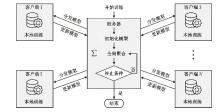
图1
联邦学习流程
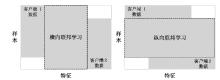
图2
横向与纵向联邦学习的数据分布特征对比
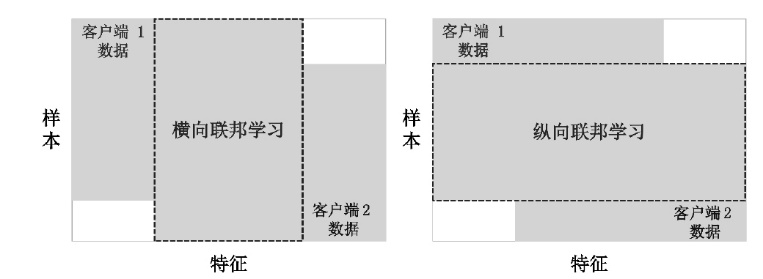
表1
联邦学习两种模式的对比结果
| 对比维度 | 横向联邦学习 | 纵向联邦学习 |
|---|---|---|
| 数据划分 | 特征相同,样本不同 | 样本重叠,特征不同 |
| 核心挑战 | 模型参数的安全聚合 | 加密实体对齐与联合建模 |
| 典型场景 | 不同医院间的医疗影像分析 | 银行与电商的联合信用评分 |
| 聚合内容 | 完整的模型参数或梯度 | 加密的中间计算结果 |
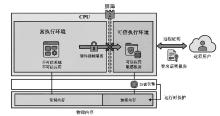
图3
可信执行环境的硬件隔离与安全机制示意图
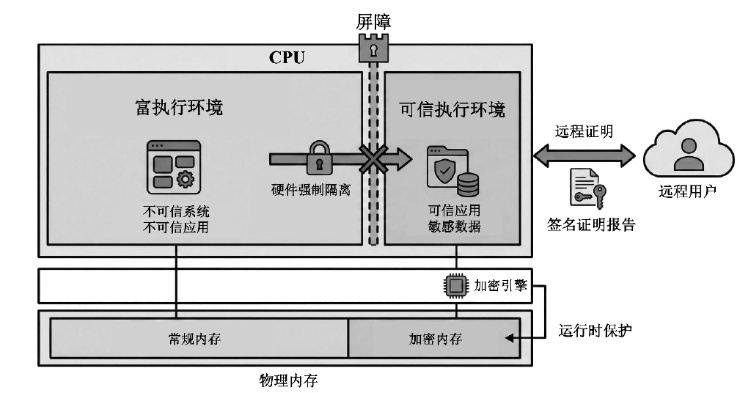
表2
TEE特性对比
| 特性 | Intel® SGX | Arm TrustZone | Intel® TDX | AMD SEV-SNP | Arm CCA |
|---|---|---|---|---|---|
| 隔离 粒度 | 进程级(Enclave) | 系统分区级 (Normal / Secure World) | 虚拟机级 (Trust Domain) | 虚拟机级 (Encrypted VM) | 虚拟机级 (Realm) |
| 部署 模型 | 代码重构/ LibOS | 专用可信OS / APP | 直接迁移 | 直接迁移 | 直接迁移 |
| 内存 容量 | SGX1受EPC限制SGX2支持动态内存 | 受限于系统配置 | 支持整个 VM 内存 | 支持整个 VM 内存 | 支持整个Realm内存 |
| 可信基(TCB) | 应用代码 SGX 硬件 | 可信OS / APP Arm 硬件 | 客户机操作系统TDX 硬件 | 客户机操作系统 AMD-SP硬件 | Realm 操作系统 Arm CCA 硬件 RMM |
| I/O 模型 | OCALL 委托 不可信主机 | 委托给非安全世界的OS处理 | 由客户机操作系统 驱动处理 | 通过共享内存 由客户机驱动处理 | 通过共享 内存 由客户机驱动处理 |
| 性能 开销 | 频繁的 Enclave 转换开销高 | 世界切换(World Switch)开销较高 | 计算开销低,完整性检查引入额外 开销 | 计算开销低,完整性检查引入额外开销 | 理论开销低(待大规模硬件验证) |
| 生态 | 成熟,研究多,已知攻击多 | 成熟,数十亿移动/IoT设备的基础 | 较新,云支持增长快 | 已在主流 云平台 广泛部署 | 发展初期,硬件生态正在构建 |
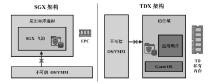
图4
Intel SGX与TDX机密计算架构对比
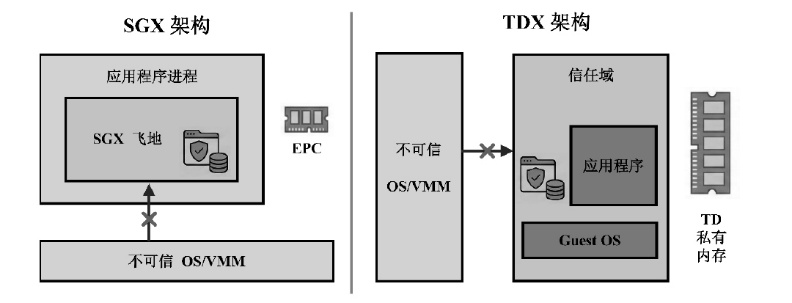
图5
联邦模拟平台架构
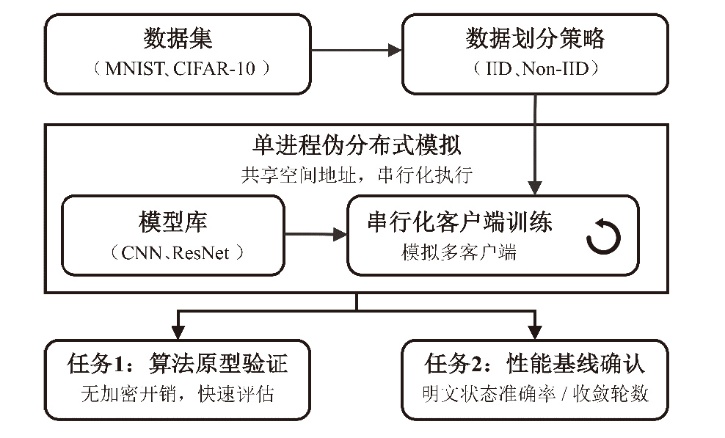
图6
联邦实验平台架构
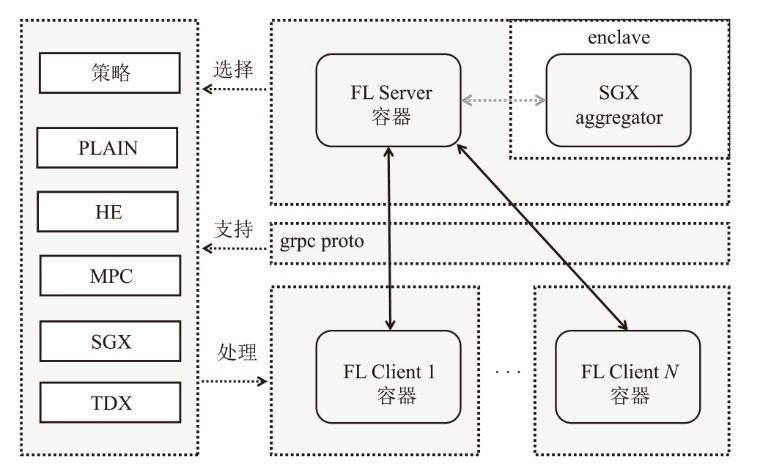
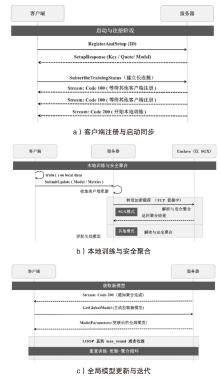
图7
联邦实验平台工作流程
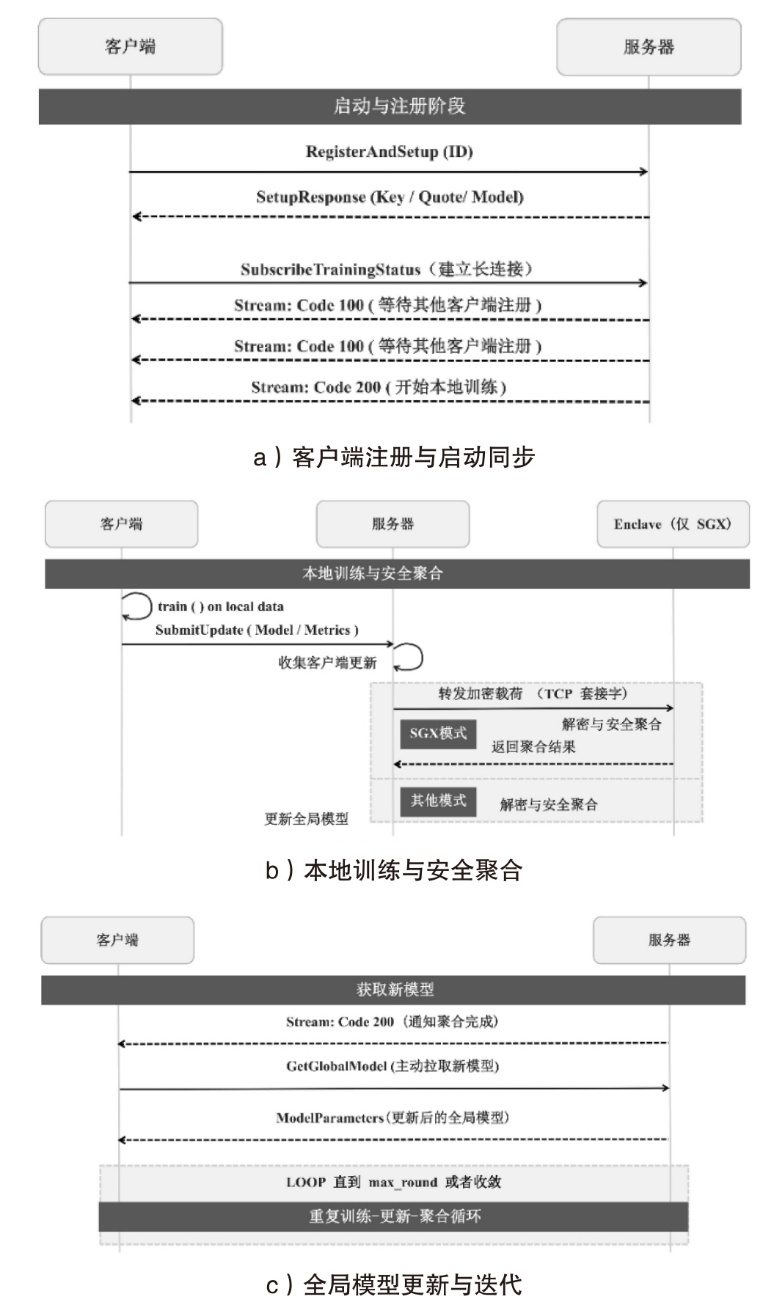
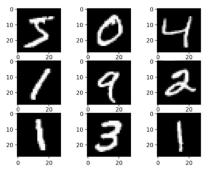
图8
MNIST数据集示例
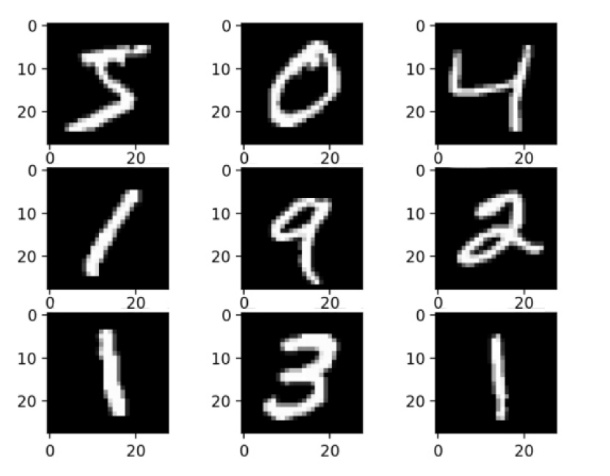
图9
CIFAR-10数据集示例
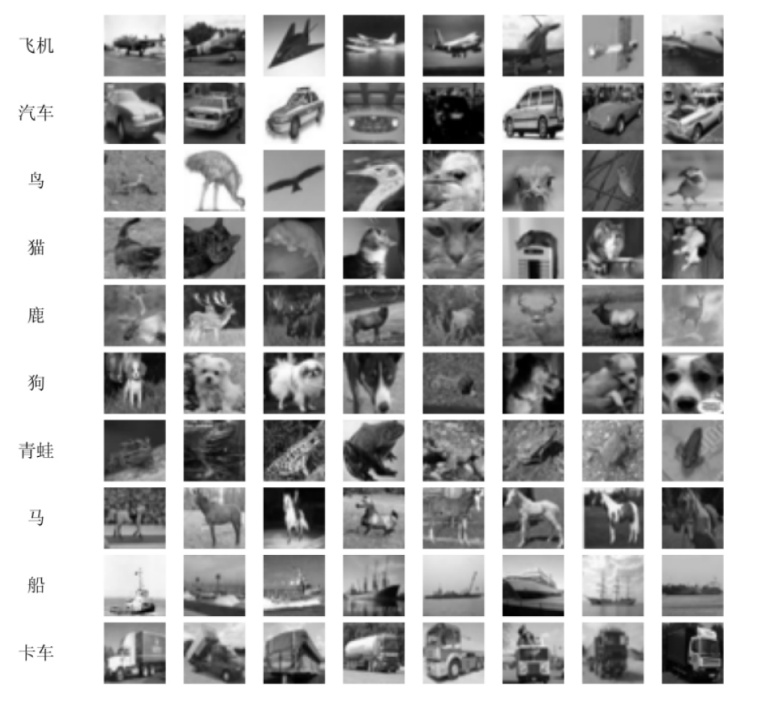
表3
模型参数特征与实验负载对比
| 模型名称 | 适配数据集 | 参数量 / M (106) | 模型体积 / MB | 实验定位 |
|---|---|---|---|---|
| SimpleCNN | MNIST ( | 0.58 | 2.3 | 功能验证 |
| ResNet-18 | CIFAR-10 ( | 11.17 | 44.6 | 真实场景模拟 |
表4
实验环境配置详情
| 组件 | 项目 | 规格参数 |
|---|---|---|
| 服务器 宿主机 | CPU | Intel® Xeon® Silver 4510 @2.40 GHz (12 Physical Cores) |
| RAM | 128 GB DDR5 | |
| Kernel | Linux 6.8.0-tetd (TDX/SGX Enabled) | |
| TEE Support | Intel® SGX2 (EPC: 128 MB)& Intel® TDX 1.0 | |
| 机密 虚拟机 | vCPU | 12 vCPUs (KVM Virtualization) |
| RAM | 16 GB Allocated | |
| OS | Ubuntu 24.04.2 LTS (Kernel 6.8.0-generic) | |
| 客户端 节点 | CPU | 2 × Intel® Xeon® Silver 4510 (48 Threads) |
| RAM | 512 GB DDR5 | |
| GPU | NVIDIA H100 PCIe (80 GB HBM3) | |
| 软件环境 | Framework | PyTorch 2.9.1 (CUDA 12.8), Python 3.12 |
| TEE Runtime | Gramine 1.9 (for SGX Enclave) | |
| Deployment | Docker 29.0.4 |
表5
联邦模拟平台实验结果
| 学习 模式 | 模型架构 | 数据集 | 数据 分布 | 准确率 | 收敛 Epoch/轮 | 通信 体积 | 本地—全局 精度差 |
|---|---|---|---|---|---|---|---|
| 集中 训练 | SimpleCNN | MNIST | — | 98.82%± 0.12% | 5.0 | — | — |
| 联邦 学习 | IID | 99.28%± 0.04% | 27.0 (5.4×5) | 71.94 MB | 0.42%±0.12% | ||
| 联邦 学习 | Non-IID | 98.94%± 0.12% | 32.0 (6.4×5) | 85.26 MB | 3.06%±0.61% | ||
| 集中 训练 | ResNet-18 | CIFAR-10 | — | 90.58%± 0.43% | 38.2 | — | — |
| 联邦 学习 | IID | 91.92%± 0.26% | 82.0 (16.4×5) | 4.10 GB | 3.68%±0.54% | ||
| 联邦 学习 | Non-IID | 89.70%± 1.03% | 180.0 (36.0×5) | 8.99 GB | 12.80%±1.99% |
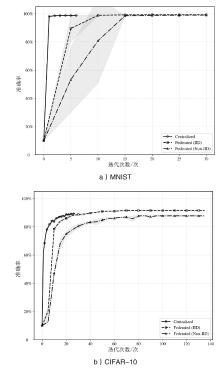
图10
联邦模拟平台收敛图
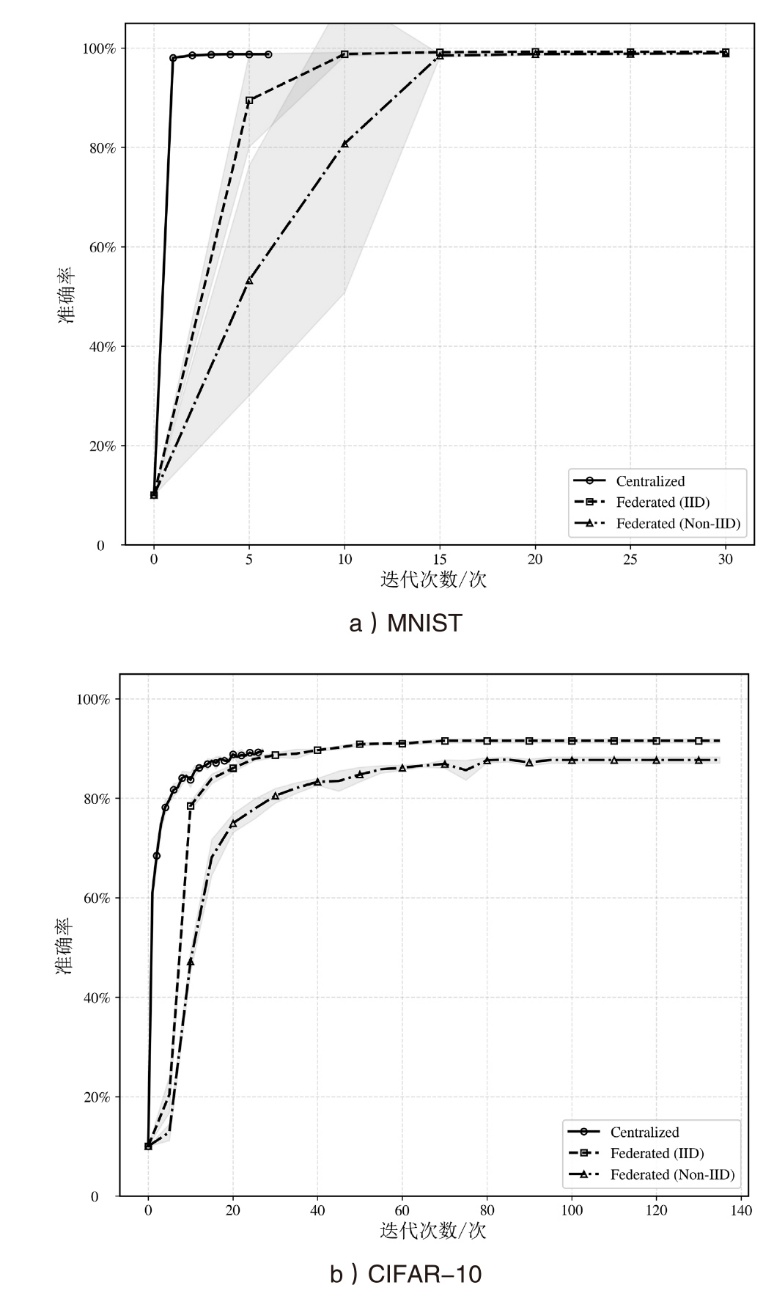
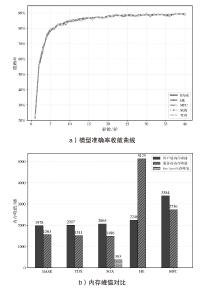
图11
隐私增强环境下的模型准确率收敛曲线与系统内存峰值开销对比
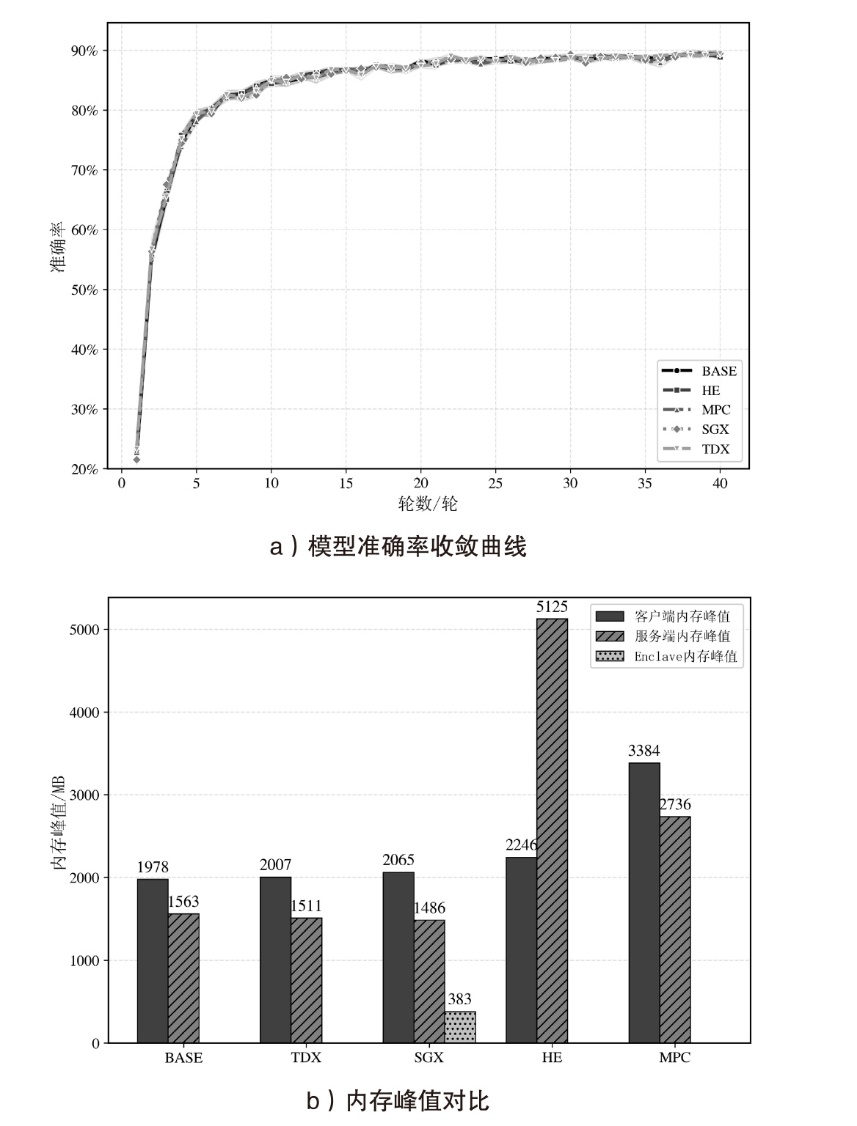
表6
各实验组内存资源消耗峰值与模型准确率统计
| 策略 | 客户端 内存峰值/MB | 服务端 内存峰值/MB | Enclave 内存峰值/MB | 准确率 |
|---|---|---|---|---|
| BASE | 1978.5±61.9 | 1563.5±159.7 | — | 89.36%±0.44% |
| HE | 2246.0±178.7 | 5124.8±71.0 | — | 88.89%±0.28% |
| MPC | 3383.6±232.4 | 2735.6±129.1 | — | 89.49%±0.45% |
| SGX | 2064.8±68.2 | 1485.9±116.1 | 383.1±13.3 | 89.51%±0.59% |
| TDX | 2006.6±72.4 | 1511.3±129.4 | — | 89.50%±0.28% |
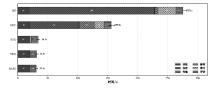
图12
不同策略在真实网络环境下的单轮训练耗时分解
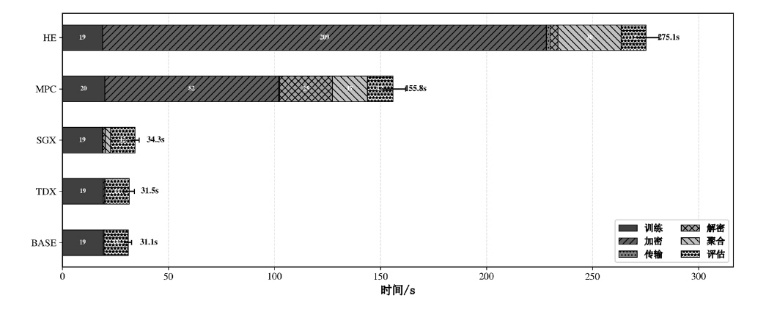
表7
不同策略下的单轮训练端到端耗时分解与通信开销
| 策略 | 训练/s | 加密/s | 传输/s | 解密/s | 聚合/s | 评估/s | 总耗时/s | 上传量/MB |
|---|---|---|---|---|---|---|---|---|
| BASE | 19.20 ± 0.82 | 0.40 ± 0.07 | 0.09 | 0.00 ± 0.00 | 0.06 ± 0.01 | 11.33 ± 1.40 | 31.08 | 42.7 |
| HE | 18.99 ± 2.20 | 209.22 ± 5.67 | 1.80 | 3.60 ± 0.22 | 29.86 ± 0.23 | 11.68 ± 0.57 | 275.15 | 897.6 |
| MPC | 19.97 ± 3.21 | 81.90 ± 4.92 | 0.51 | 24.86 ± 0.47 | 16.58 ± 0.32 | 12.02 ± 1.06 | 155.84 | 256.0 |
| SGX | 18.88 ± 0.89 | 0.16 ± 0.02 | 0.04 | 1.09 ± 0.07 | 2.55 ± 0.17 | 11.57 ± 1.67 | 34.29 | 21.3 |
| TDX | 19.26 ± 2.37 | 0.45 ± 0.08 | 0.09 | 0.59 ± 0.11 | 0.06 ± 0.01 | 11.05 ± 0.83 | 31.50 | 42.7 |
| [1] | SHOKRI R, SHMATIKOV V.Privacy-Preserving Deep Learning[C]//ACM. The 22nd ACM SIGSAC Conference on Computer and Communications Security. New York: ACM, 2015: 1310-1321. |
| [2] | MCMAHAN B, MOORE E, RAMAGE D, et al. Communication-Efficient Learning of Deep Networks from Decentralized Data[C]//PMLR.The 20th International Conference on Artificial Intelligence and Statistics. New York: PMLR, 2017: 1273-1282. |
| [3] | YANG Li, ZHU Lingbo, YU Yueming, et al. Review of Federated Learning and Offensive-Defensive Confrontation[J]. Netinfo Security, 2023, 23(12): 69-90. |
| 杨丽, 朱凌波, 于越明, 等. 联邦学习与攻防对抗综述[J]. 信息网络安全, 2023, 23(12): 69-90. | |
| [4] | HITAJ B, ATENIESE G, PEREZ-CRUZ F. Deep Models under the GAN: Information Leakage from Collaborative Deep Learning[C]//ACM. The 24th ACM SIGSAC Conference on Computer and Communications Security. New York: ACM, 2017: 603-618. |
| [5] | GILAD-BACHRACH R, DOWLIN N, LAINE K, et al. Cryptonets: Applying Neural Networks to Encrypted Data with High Throughput and Accuracy[C]//PMLR. The 33rd International Conference on Machine Learning. New York: PMLR, 2016: 201-210. |
| [6] | SHEN Youren, TIAN Hongliang, CHEN Yu, et al. Occlum: Secure and Efficient Multitasking inside a Single Enclave of Intel SGX[C]// ACM. The Twenty-Fifth International Conference on Architectural Support for Programming Languages and Operating Systems. New York: ACM, 2020: 955-970. |
| [7] |
KAIROUZ P, MCMAHAN H B, AVENT B, et al. Advances and Open Problems in Federated Learning[J]. Foundations and Trends® in Machine Learning, 2021, 14(1-2): 1-210.
doi: 10.1561/MAL URL |
| [8] | HE Zeping, XU Jian, DAI Hua, et al. A Review of Federated Learning Application Technologies[J]. Netinfo Security, 2024, 24(12): 1831-1844. |
| 何泽平, 许建, 戴华, 等. 联邦学习应用技术研究综述[J]. 信息网络安全, 2024, 24(12): 1831-1844. | |
| [9] |
LIU Yang, KANG Yan, ZOU Tianyuan, et al. Vertical Federated Learning: Concepts, Advances, and Challenges[J]. IEEE Transactions on Knowledge and Data Engineering, 2024, 36(7): 3615-3634.
doi: 10.1109/TKDE.2024.3352628 URL |
| [10] | GAO Ying, CHEN Xiaofeng, ZHANG Yiyu, et al. A Survey of Attack and Defense Techniques for Federated Learning Systems[J]. Chinese Journal of Computers, 2023, 46(9): 1781-1805. |
| 高莹, 陈晓峰, 张一余, 等. 联邦学习系统攻击与防御技术研究综述[J]. 计算机学报, 2023, 46(9): 1781-1805. | |
| [11] | BONAWITZ K, IVANOV V, KREUTER B, et al.Practical Secure Aggregation for Privacy-Preserving Machine Learning[C]// ACM. The 2017 ACM SIGSAC Conference on Computer and Communications Security. New York: ACM, 2017: 1175-1191. |
| [12] | LI Yipeng, LYU Xinchen. Convergence Analysis of Sequential Federated Learning on Heterogeneous Data[J]. Advances in Neural Information Processing Systems, 2023, 36: 56700-56755. |
| [13] | NING Zhenyu, ZHANG Fengwei, SHI Weisong. Research on Trusted Execution Environment Based on Edge Computing[J]. Journal of Computer Research and Development, 2019, 56(7): 1441-1453. |
| 宁振宇, 张锋巍, 施巍松. 基于边缘计算的可信执行环境研究[J]. 计算机研究与发展, 2019, 56(7): 1441-1453. | |
| [14] | ARM Limited. TrustZone for Armv8-A[EB/OL]. [2025-11-31]. https://developer.arm.com/-/media/Arm%20Developer%20Community/PDF/Learn%20the%20Architecture/TrustZone%20for%20Armv8-A.pdf. |
| [15] | COSTAN V, DEVADAS S. Intel SGX Explained[R].IACR, Cryptology ePrint Archive, Report 2016/086, 2016. |
| [16] | Intel Corporation. Intel Trust Domain Extensions[EB/OL]. (2021-05-01)[2025-12-10]. https://www.intel.com/content/www/us/en/developer/tools/trust-domain-extensions/documentation.html. |
| [17] | MCKEEN F, ALEXANDROVICH I, BERENZON A, et al.Innovative Instructions and Software Model for Isolated Execution[C]//ACM. The 2nd International Workshop on Hardware and Architectural Support for Security and Privacy. New York: ACM, 2013: 10. |
| [18] | TSAI C, PORTER D E, VIJ M.Graphene-SGX: A Practical Library OS for Unmodified Applications on SGX[C]//USENIX. 2017 USENIX Annual Technical Conference. Berkeley: USENIX, 2017: 645-658. |
| [19] | PINTO S, SANTOS N. Demystifying Arm TrustZone: A Comprehensive Survey[J]. ACM Computing Surveys, 2019, 51(6): 1-36. |
| [20] | LIPP M. Cache Attacks and Rowhammer on ARM[D]. Graz: Graz University of Technology, 2016. |
| [21] | ARM LTD. ARM TrustZone for Cortex-A: Technical Reference Manual[D]. Cambridge: ARM Ltd, Revision r1p0, 2022. |
| [22] | LI Mengyuan, ZHANG Yinqian, WANG Huibo, et al. CIPHERLEAKS: Breaking Constant-Time Cryptography on AMD SEV via the Ciphertext Side Channel[C]//USENIX. The 30th USENIX Security Symposium (USENIX Security 21). Berkeley: USENIX, 2021: 717-732. |
| [23] | ZHANG Yiming, HU Yuxin, NING Zhenyu, et al. SHELTER: Extending ARM CCA with Isolation in User Space[C]//USENIX. The 32nd USENIX Security Symposium (USENIX Security 23). Berkeley: USENIX, 2023: 6257-6274. |
| [24] | ZHANG Fengwei, ZHOU Lei, ZHANG Yiming, et al. Trusted Execution Environment: Status and Prospects[J]. Journal of Computer Research and Development, 2024, 61(1): 243-260. |
| 张锋巍, 周雷, 张一鸣, 等. 可信执行环境:现状与展望[J]. 计算机研究与发展, 2024, 61(1): 243-260. | |
| [25] | VAN BULCK J, PIESSENS F, STRACKX R. SGX-Step: A Practical Attack Framework for Precise Enclave Execution Control[C]//ACM. The 2nd Workshop on System Software for Trusted Execution. New York: ACM, 2017: 1-6. |
| [26] | BAUMANN A, PEINADO M, HUNT G. Shielding Applications from an Untrusted Cloud with Haven[J]. ACM Transactions on Computer Systems (TOCS), 2015, 33(3): 1-26. |
| [27] | FREDRIKSON M, JHA S, RISTENPART T.Model Inversion Attacks that Exploit Confidence Information and Basic Countermeasures[C]//ACM. The 22nd ACM SIGSAC Conference on Computer and Communications Security. New York: ACM, 2015: 1322-1333. |
| [28] | ZHU Ligeng, LIU Zhijian, HAN Song. Deep Leakage from Gradients[J]. Advances in Neural Information Processing Systems, 2019, 32: 14400-14409. |
| [29] | NASR M, SHOKRI R, HOUMANSADR A. Comprehensive Privacy Analysis of Deep Learning: Passive and Active White-Box Inference Attacks against Centralized and Federated Learning[C]//IEEE. 2019 IEEE Symposium on Security and Privacy (SP). New York: IEEE, 2019: 739-753. |
| [30] | ABADI M, CHU A, GOODFELLOW I, et al. Deep Learning with Differential Privacy[C]//ACM. The 23rd ACM Conference on Computer and Communications Security. New York: ACM, 2016: 308-318. |
| [31] | GHAZI B, GOLOWICH N, KUMAR R, et al. Deep Learning with Label Differential Privacy[J]. Advances in Neural Information Processing Systems, 2021, 34: 27131-27145. |
| [32] | MOHASSEL P, ZHANG Yupeng. Secureml: A System for Scalable Privacy-Preserving Machine Learning[C]//IEEE. 2017 IEEE Symposium on Security and Privacy (SP). New York: IEEE, 2017: 19-38. |
| [33] |
CHEN Yu, LUO Fang, LI Tong, et al. A Training-Integrity Privacy-Preserving Federated Learning Scheme with Trusted Execution Environment[J]. Information Sciences, 2020, 522: 69-79.
doi: 10.1016/j.ins.2020.02.037 URL |
| [34] | PENG Wei, LI Yinshuai, ZHANG Yinqian. Shadows in Cipher Spaces: Exploiting Tweak Repetition in Hardware Memory Encryption[C]//USENIX. The 34th USENIX Security Symposium (USENIX Security 25). Berkeley: USENIX, 2025: 5759-5776. |
| [35] |
WITHARANA H, WEERASENA H, MISHRA P. Formal Verification of Virtualization-Based Trusted Execution Environments[J]. IEEE Transactions on Computer-Aided Design of Integrated Circuits and Systems, 2024, 43(11): 4262-4273.
doi: 10.1109/TCAD.2024.3443008 URL |
| [36] | ZHANG Ziqi, GONG Chen, CAI Yifeng, et al. No Privacy Left Outside: On the (In-) Security of TEE-Shielded DNN Partition for On-Device ML[C]//2024 IEEE Symposium on Security and Privacy (SP). New York: IEEE, 2024: 3327-3345. |
| [37] | LECUN Y, CORTES C. The MNIST Database of Handwritten Digits[EB/OL]. (1998-01-01)[2025-01-15]. http://yann.lecun.com/exdb/mnist/. |
| [38] | KRIZHEVSKY A, HINTON G. Learning multiple layers of features from tiny images[EB/OL]. (2009-09-01)[2025-12-15]. https://www.cs.toronto.edu/-kriz/learning-features-2009-TR.pdf. |
| [39] | HSU T M H, QI Huiqi, BROWN M. Measuring the Effects of Non-Identical Data Distribution for Federated Visual Classification[EB/OL]. (2019-09-13)[2025-12-15]. https://arxiv.org/abs/1909.06335. |
| [1] | 张浩, 叶骏威. 基于深度主动学习的联邦半监督入侵检测系统[J]. 信息网络安全, 2026, 26(6): 944-957. |
| [2] | 崔津华, 董亮, 杨新. 大语言模型推理隐私保护技术综述[J]. 信息网络安全, 2026, 26(4): 503-520. |
| [3] | 易文哲, 徐枭洋, 石磊, 庄泳, 王鹃. 基于知识迁移和冻结的模型反演防御方法[J]. 信息网络安全, 2026, 26(4): 566-578. |
| [4] | 林甜甜, 王奕天, 王小航, 竺婷, 任奎. CCASim:Arm机密计算架构性能仿真器研究[J]. 信息网络安全, 2026, 26(2): 189-210. |
| [5] | 赵佳, 王妍淳, 马洪亮, 李琪. 基于可信执行环境的层次角色基分级加密方案[J]. 信息网络安全, 2026, 26(2): 315-324. |
| [6] | 郭毅, 李旭青, 张子蛟, 张宏涛, 张连成, 张香丽. 基于区块链的数据安全共享研究[J]. 信息网络安全, 2026, 26(1): 1-23. |
| [7] | 郑开发, 骆振鹏, 刘嘉奕, 刘志全, 王赜, 吴云坤. 支持属性更新的轻量级联邦学习节点动态参与方案[J]. 信息网络安全, 2026, 26(1): 102-114. |
| [8] | 施寅生, 包阳, 庞晶晶. 一种对抗GAN攻击的联邦隐私增强方法研究[J]. 信息网络安全, 2026, 26(1): 49-58. |
| [9] | 陈先意, 汪学波, 崔琦, 付章杰, 王茜茜, 曾一福. 面向个性化联邦学习的后门攻击与防御综述[J]. 信息网络安全, 2025, 25(9): 1418-1438. |
| [10] | 拾以娟, 周丹平, 范磊, 刘茵. 基于可信执行环境的安全多方计算协议[J]. 信息网络安全, 2025, 25(9): 1439-1446. |
| [11] | 荀毅杰, 崔嘉容, 毛伯敏, 秦俊蔓. 基于联邦学习的智能汽车CAN总线入侵检测系统[J]. 信息网络安全, 2025, 25(6): 872-888. |
| [12] | 邓东上, 王伟业, 张卫东, 吴宣够. 基于模型特征方向的分层个性化联邦学习框架[J]. 信息网络安全, 2025, 25(6): 889-897. |
| [13] | 朱率率, 刘科乾. 基于掩码的选择性联邦蒸馏方案[J]. 信息网络安全, 2025, 25(6): 920-932. |
| [14] | 赵锋, 范淞, 赵艳琦, 陈谦. 基于本地差分隐私的可穿戴医疗设备流数据隐私保护方法[J]. 信息网络安全, 2025, 25(5): 700-712. |
| [15] | 秦金磊, 康毅敏, 李整. 智能电网中轻量级细粒度的多维多子集隐私保护数据聚合[J]. 信息网络安全, 2025, 25(5): 747-757. |
| 阅读次数 | ||||||
|
全文 |
|
|||||
|
摘要 |
|
|||||