信息网络安全 ›› 2026, Vol. 26 ›› Issue (10): 1569-1580.doi: 10.3969/j.issn.1671-1122.2026.10.005
基于主客观指标动态融合的威胁情报质量评估方法
黄诚( ), 韦英炜, 吴家丞, 程芃森, 杨频
四川大学网络空间安全学院 成都 610605
-
收稿日期:2026-05-11出版日期:2026-10-10发布日期:2026-11-06 -
通讯作者:黄诚 E-mail:codesec@scu.edu.cn -
作者简介:黄诚(1987—),男,四川,教授,博士,CCF高级会员,主要研究方向为攻击检测、威胁溯源|韦英炜(2000—),男,广西,硕士研究生,主要研究方向为威胁检测|吴家丞(2005—),男,山东,本科,主要研究方向为网络空间安全|程芃森(1988—),男,四川,助理研究员,博士,CCF会员,主要研究方向为自然语言处理,舆情分析|杨频(1967—),男,四川,教授,博士,主要研究方向为舆情分析、软件安全 -
基金资助:国家自然科学基金(62472296);四川省科技计划项目(2025JDRC0007)
Threat intelligence quality assessment based on dynamic fusion of subjective and objective indicators
Huang Cheng(), Wei Yingwei, Wu Jiacheng, Cheng Pengsen, Yang Pin
School of Cyber Science and Engineering ,Sichuan University Chengdu 610605, China
-
Received:2026-05-11Online:2026-10-10Published:2026-11-06 -
Contact:Huang Cheng E-mail:codesec@scu.edu.cn

摘要:
随着网络攻击频率和复杂度的不断提升,威胁情报驱动的防御范式已成为应对复杂网络攻击的重要手段。现有开源威胁情报主要通过开放情报平台进行共享,但仍有大量最新威胁情报散落于社交账号动态、技术博客、专业论坛和个人网站,该类情报存在及时性高、质量和可信度差异大、来源众多等特点,缺乏统一的质量评价标准。为实现对海量威胁情报质量的自动化评估,文章提出一种基于主客观指标动态融合的威胁情报质量评估方法。从统计数据和内容分析两个角度共提出12项指标,基于时序计算出情报源在各时间点的综合评分,采用融合Transformer的自编码器提取权重,并结合时序平滑机制抑制短期波动引发的突变。实验收集了347个威胁情报网站共810911篇文章作为数据集,从指标相关性、模型性能及方法应用效果方面开展实验验证。实验结果表明,文章所提指标具有良好区分度,可从不同维度评估情报质量,且评估结果与实际质量之间具有较高的一致性。
中图分类号:
引用本文
黄诚, 韦英炜, 吴家丞, 程芃森, 杨频. 基于主客观指标动态融合的威胁情报质量评估方法[J]. 信息网络安全, 2026, 26(10): 1569-1580.
Huang Cheng, Wei Yingwei, Wu Jiacheng, Cheng Pengsen, Yang Pin. Threat intelligence quality assessment based on dynamic fusion of subjective and objective indicators[J]. Netinfo Security, 2026, 26(10): 1569-1580.
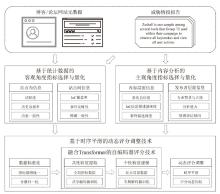
图1
基于主客观指标动态融合的情报质量评估方法框架

表1
指标与对应标准化方法
| 指标名称 | 标准化方法 | 指标名称 | 标准化方法 |
|---|---|---|---|
| 活跃度 | Z-score | 表达自信度 | Min-Max |
| 历史误报率 | Min-Max | IoC信息描述清晰度 | Min-Max |
| 内容一致性 | Min-Max | 事件描述深度 | Min-Max |
| IoC覆盖率 | Min-Max | 专业背景与立场 | Z-score |
| 事件及时性 | Z-score | 分析能力 | Min-Max |
| 跨源一致性 | Min-Max | 情感表达倾向 | Min-Max |
表2
实验环境及配置
| 名称 | 版本信息 |
|---|---|
| CPU | Intel(R) Xeon(R) CPU E5-2680 v4 •2 |
| 内存 | 128 GB |
| 显卡 | NVIDIA TITAN RTX • 2 |
| 操作系统 | Ubuntu 20.04 |
| Python | 3.6.3;3.8.19;3.9.21 |
| 相关软件 | conda 23.11.0 |
| CUDA 11.8 | |
| cuDNN 8.7 | |
| NVIDIA Driver 535.54.03 | |
| MongoDB 7.0.3 | |
| PyTorch 2.6.0 | |
| Transformers 4.49.0 |
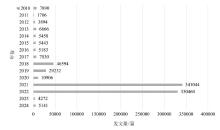
图2
数据集中文章发布时间分布情况
表3
相关参数及取值
| 参数名称 | 参数说明 | 参数取值 |
|---|---|---|
| feature_dim | 每篇文章的指标数量 | 12 |
| d_model | 自编码器的隐藏层维度 | 512 |
| nhead | 多头注意力机制的头数 | 8 |
| num_layers | 编码器和解码器的层数 | 6 |
| dim_feedforward | 前馈网络的隐藏层维度 | 2048 |
| dropout | 各层使用的dropout比率 | 0.1 |
| batch_size | 训练时的批量大小 | 32 |
| encoder_train_epochs | 共享编码器训练的总轮数 | 400 |
| decoder_train_epochs | 专属解码器训练的总轮数 | 50 |
| learning_rate | 优化器的学习率 | 0.001 |
| time_decay | 指标的时间衰减因子 | 0.001 |
| early_stopping_delta | 早停机制的提升阈值 | 0.001 |
| early_stopping_patience | 早停机制的忍耐轮数 | 10 |
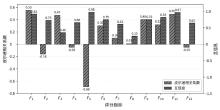
图3
评分指标与质量评分相关性分布
图4
评分指标相关性矩阵
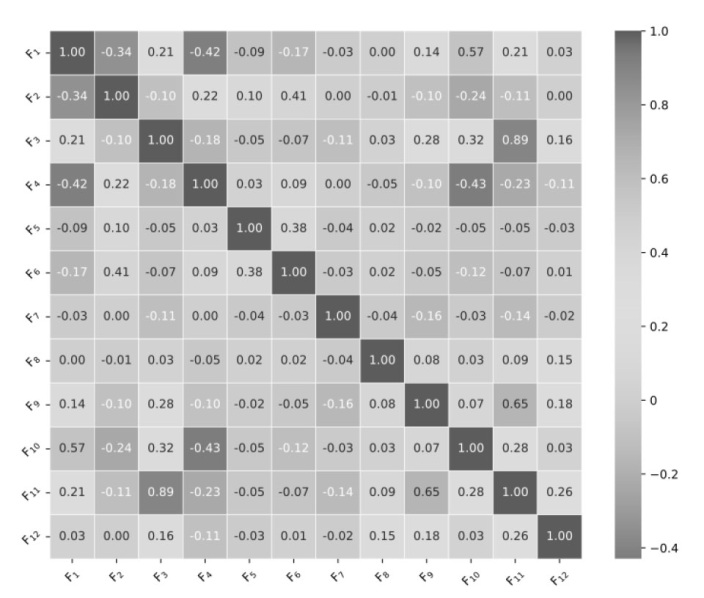
表4
动态权重模型得分对比
| 方法 | MSE | MAE | 信息熵 |
|---|---|---|---|
| PCA | 0.015 | 0.015 | 1.013 |
| t-SNE | 0.044 | 0.046 | 0.291 |
| 本文自编码器 | 0.166 | 0.202 | 2.051 |
表5
无噪声时权重平滑机制效果示例
| 方法 | 权重波动性 | SNR | 突变点保留率 |
|---|---|---|---|
| 无 | 0.212 | — | — |
| MA | 0.187 | 0.904 | 0.864 |
| MF | 0.163 | 3.232 | 0.251 |
| EWMA | 0.212 | — | 0.914 |
表6
MA在不同噪声强度下的表现
| 噪声强度 | 权重波动性 | SNR | 突变点保留率 |
|---|---|---|---|
| 0 | 0.187 | 0.904 | 0.864 |
| 0.5 | 0.190 | 0.843 | 0.848 |
| 1 | 0.197 | 0.619 | 0.741 |
| 1.5 | 0.208 | 0.404 | 0.741 |
| 2 | 0.223 | 0.308 | 0.672 |
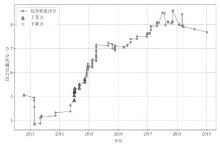
图5
情报源Paul Roberts评分变化趋势
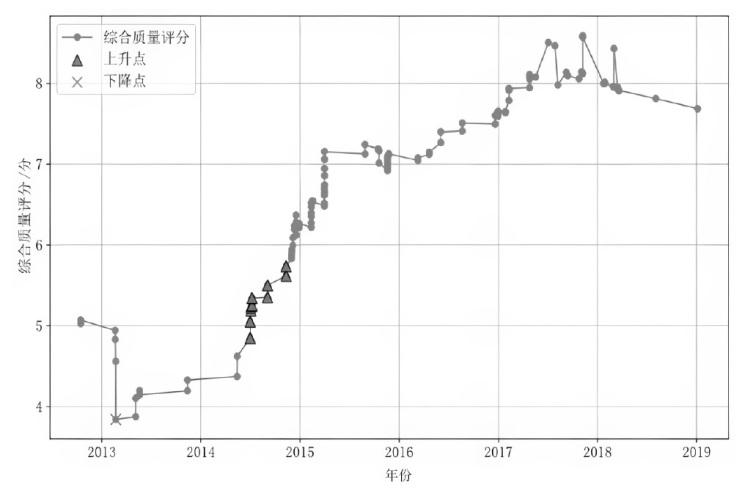
表7
情报源评分排名Top 10
| 排名 | 情报源名称 | 文章最后发布时间 | 文章最后发布时评分 |
|---|---|---|---|
| 1 | APT Report | 2017-03-16 | 8.334 |
| 2 | Jon Clay | 2020-12-09 | 8.059 |
| 3 | Anomali | 2020-05-19 | 8.029 |
| 4 | Paul Roberts | 2019-01-04 | 7.687 |
| 5 | Schneier on Security | 2023-05-31 | 7.604 |
| 6 | FireEye | 2022-06-06 | 7.493 |
| 7 | SafeBreach Labs | 2019-01-10 | 7.294 |
| 8 | ZDNET Security | 2022-05-17 | 7.243 |
| 9 | Pierluigi Paganini | 2020-12-30 | 7.217 |
| 10 | Skybox Blog Team | 2018-05-31 | 6.881 |
表8
情报源评分排名Bottom 10
| 排名 | 情报源名称 | 文章最后发布时间 | 文章最后发布时评分 |
|---|---|---|---|
| 71 | Kathleen Metrick | 2020-05-19 | 4.377 |
| 72 | Alyssa Shames | 2017-05-02 | 4.297 |
| 73 | Chris Brook | 2017-11-08 | 4.106 |
| 74 | Violet Blue | 2015-10-09 | 4.068 |
| 75 | Danny Bradbury | 2020-02-24 | 3.888 |
| 76 | Paul Ducklin | 2023-06-06 | 3.536 |
| 77 | Raj Chandel | 2020-09-13 | 3.482 |
| 78 | Stu Sjouwerman | 2023-08-02 | 3.419 |
| 79 | Felix Jimenez | 2020-01-03 | 3.408 |
| 80 | Rick M Robinson | 2018-02-02 | 3.404 |
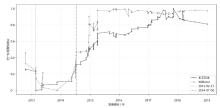
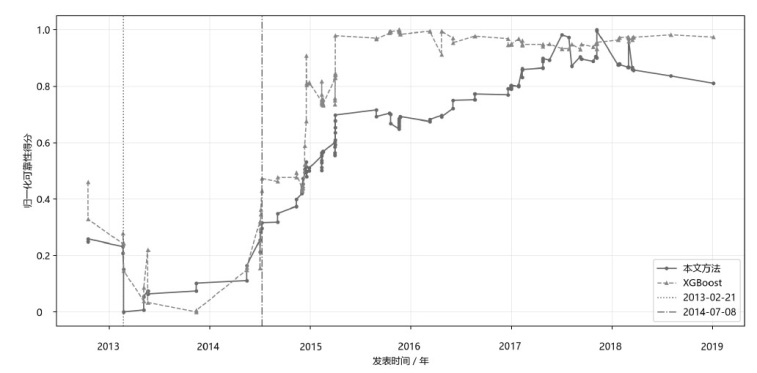
图6
本文方法与XGBoost对比
| [1] |
Singh S, Sharma P K, Moon S Y, et al. A comprehensive study on APT attacks and countermeasures for future networks and communications: challenges and solutions[J]. The Journal of Supercomputing, 2019, 75 (8): 4543-4574.
doi: 10.1007/s11227-016-1850-4 |
| [2] | Ghafir I, Prenosil V. Advanced persistent threat attack detection: an overview[J]. Int J Adv Comput Netw Secur, 2014, 4(4): 50-54. |
| [3] | Tatam M, Shanmugam B, Azam S, et al. A review of threat modelling approaches for APT-style attacks[J]. Heliyon, 2021, 7(1): 1-19. |
| [4] | Alshamrani A, Myneni S, Chowdhary A, et al. A survey on advanced persistent threats: techniques, solutions, challenges, and research opportunities[J]. IEEE Communications Surveys & Tutorials, 2019, 21(2): 1851-1877. |
| [5] | Fahad M, Airf H, Kumar A, et al. Securing against APTs: advancements in detection and mitigation[J]. BIN: Bulletin Of Informatics, 2023, 1(2): 59-70. |
| [6] | Schlette D, Caselli M, Pernul G. A comparative study on cyber threat intelligence: the security incident response perspective[J]. IEEE Communications Surveys & Tutorials, 2021, 23(4): 2525-2556. |
| [7] |
Abu M S, Selamat S R, Ariffin A, et al. Cyber threat intelligence-issue and challenges[J]. Indonesian Journal of Electrical Engineering and Computer Science, 2018, 10(1): 371-379.
doi: 10.11591/ijeecs.v10.i1 URL |
| [8] |
Schlette D, Böhm F, Caselli M, et al. Measuring and visualizing cyber threat intelligence quality[J]. International Journal of Information Security, 2021, 20(1): 21-38.
doi: 10.1007/s10207-020-00490-y |
| [9] | Geras T, Schreck T. The “big beast to tackle”: practices in quality assurance for cyber threat intelligence[C]// The 27th International Symposium on Research in Attacks, Intrusions and Defenses. New York: ACM, 2024: 337-352. |
| [10] |
Capuano N, Fenza G, Loia V, et al. Content-based fake news detection with machine and deep learning: a systematic review[J]. Neurocomputing, 2023, 530: 91-103.
doi: 10.1016/j.neucom.2023.02.005 URL |
| [11] | Fahad M, Airf H, Kumar A, et al. Securing against APTs: advancements in detection and mitigation[J]. BIN: Bulletin of Informatics, 2023, 1(2): 59-70. |
| [12] |
De Oliveira N R, Pisa P S, Lopez M A, et al. Identifying fake news on social networks based on natural language processing: trends and challenges[J]. Information, 2021, 12(1): 1-32.
doi: 10.3390/info12010001 URL |
| [13] | Zibak A, Sauerwein C, Simpson A C. Threat intelligence quality dimensions for research and practice[J]. Digital Threats: Research and Practice, 2022, 3(4): 1-22. |
| [14] | Yang Libin, Wang Menghan, Lou Wei. An automated dynamic quality assessment method for cyber threat intelligence[J]. Computers & Security, 2025, 148: 1-12. |
| [15] | Wang Menghan, Yang Libin, Lou Wei. A comprehensive dynamic quality assessment method for cyber threat intelligence[C]// 2022 52nd Annual IEEE/IFIP International Conference on Dependable Systems and Networks Workshops. New York: IEEE, 2022: 178-181. |
| [16] | Ghazi Y, Anwar Z, Mumtaz R, et al. A supervised machine learning based approach for automatically extracting high-level threat intelligence from unstructured sources[C]// 2018 International Conference on Frontiers of Information Technology. New York: IEEE, 2018: 129-134. |
| [17] |
Rodriguez A, Okamura K. Enhancing data quality in real-time threat intelligence systems using machine learning[J]. Social Network Analysis and Mining, 2020, 10(1): 1-22.
doi: 10.1007/s13278-019-0612-8 |
| [18] | Arazzi M, Arikkat D R, Nicolazzo S, et al. NLP-based techniques for cyber threat intelligence[J]. Computer Science Review, 2025, 58: 1-49. |
| [19] | 周景贤, 李其蔚, 程志棚. 基于多源异构数据的网络威胁情报质量评估方法[J]. 中国民航大学学报, 2024, 42(4): 29-36. |
| [20] |
向夏雨, 顾钊铨, 曾丽仪. 网络威胁情报共享与融合技术综述[J]. 网络空间安全科学学报, 2024, 2(2): 2-17.
doi: 10.20172/j.issn.2097-3136.240201 |
| [21] | 胡禹希, 贾艳. 基于层次分析法的威胁情报源质量评估模型[J]. 信息技术, 2022(6): 131-138. |
| [22] | 刘汉生, 唐洪玉, 薄明霞, 等. 基于机器学习的多源威胁情报质量评价方法[J]. 电信科学, 2024, 36(1): 119-126. |
| [1] | 朱慧敏, 王晨龙, 刘光华. 基于双关系图时序建模的弱网异常行为区分方法[J]. 信息网络安全, 2026, 26(8): 1290-1307. |
| [2] | 胡勉宁, 李欣, 李明锋, 袁得嵛. 基于大语言模型的多策略增强中文网络威胁情报实体抽取研究[J]. 信息网络安全, 2026, 26(4): 615-625. |
| [3] | 曹骏, 向尕, 任亚唯, 谭自程, 杨群生. 基于大模型的少样本APT攻击事件抽取方法[J]. 信息网络安全, 2025, 25(9): 1338-1347. |
| [4] | 王方圆, 练智超, 李千目, 顾欢欢, 赵谦. 基于多维度特征与PageRank优化的恶意网址研判方法研究[J]. 信息网络安全, 2025, 25(4): 564-577. |
| [5] | 韩益亮, 彭一轩, 吴旭光, 李鱼. 基于图变分自编码器的多模态特征融合加密流量分类模型[J]. 信息网络安全, 2025, 25(12): 1914-1926. |
| [6] | 任昌禹, 张玲, 姬航远, 杨立群. 基于预训练模型和中英文威胁情报的TTP识别方法研究[J]. 信息网络安全, 2024, 24(7): 1076-1087. |
| [7] | 问闻, 刘钦菊, 邝琳, 任雪静. 隐私保护体系下网络威胁情报共享的研究现状和方案设计[J]. 信息网络安全, 2024, 24(7): 1129-1137. |
| [8] | 吴昊天, 李一凡, 崔鸿雁, 董琳. 基于零知识证明和区块链的联邦学习激励方案[J]. 信息网络安全, 2024, 24(1): 1-13. |
| [9] | 秦中元, 马楠, 余亚聪, 陈立全. 基于双重图神经网络和自编码器的网络异常检测[J]. 信息网络安全, 2023, 23(9): 1-11. |
| [10] | 吴尚远, 申国伟, 郭春, 陈意. 威胁情报驱动的动态威胁狩猎方法[J]. 信息网络安全, 2023, 23(6): 91-103. |
| [11] | 叶桓荣, 李牧远, 姜波. 基于迁移学习和威胁情报的DGA恶意域名检测方法研究[J]. 信息网络安全, 2023, 23(10): 8-15. |
| [12] | 冯景瑜, 张琪, 黄文华, 韩刚. 基于跨链交互的网络安全威胁情报共享方案[J]. 信息网络安全, 2022, 22(5): 21-29. |
| [13] | 郭森森, 王同力, 慕德俊. 基于生成对抗网络与自编码器的网络流量异常检测模型[J]. 信息网络安全, 2022, 22(12): 7-15. |
| [14] | 蒋首志, 曹金璇, 殷浩展, 芦天亮. 基于MHA与SDAE的Tor网站指纹识别模型[J]. 信息网络安全, 2022, 22(10): 8-14. |
| [15] | 徐硕, 张睿, 夏辉. 基于数据属性修改的联邦学习隐私保护策略[J]. 信息网络安全, 2022, 22(1): 55-63. |
| 阅读次数 | ||||||
|
全文 |
|
|||||
|
摘要 |
|
|||||