Netinfo Security ›› 2026, Vol. 26 ›› Issue (8): 1224-1236.doi: 10.3969/j.issn.1671-1122.2026.08.005
Previous Articles Next Articles
Cross-domain collaborative zero-trust model for industrial Internet to counter APT data theft
Feng Jingyu, Yin Jingyi( ), Zhang Senyong, Li Jinghui
National Engineering Research Center for Wireless Security ,Xi’an University of Posts and Telecommunications Xi’an 710121, China
-
Received:2026-01-15Online:2026-08-10Published:2026-09-23 -
Contact:Yin Jingyi E-mail:203936711@qq.com

CLC Number:
Cite this article
Feng Jingyu, Yin Jingyi, Zhang Senyong, Li Jinghui. Cross-domain collaborative zero-trust model for industrial Internet to counter APT data theft[J]. Netinfo Security, 2026, 26(8): 1224-1236.
share this article
Add to citation manager EndNote|Ris|BibTeX
URL: http://netinfo-security.org/EN/10.3969/j.issn.1671-1122.2026.08.005
| 模型 | 零信任引入 | 信任评估 | 突发行为阻断 | 跨域防御 |
|---|---|---|---|---|
| 文献[ | 不支持 | 不支持 | 不支持 | 支持 |
| 文献[ | 不支持 | 动态 | 不支持 | 不支持 |
| 文献[ | 支持 | 不支持 | 不支持 | 不支持 |
| 文献[ | 支持 | 支持 | 不支持 | 不支持 |
| 文献[ | 支持 | 动态 | 及时阻断 | 不支持 |
| 本文模型 | 支持 | 动态 | 及时阻断 | 支持 |
| 实验环境 | 环境配置 |
|---|---|
| 操作系统 | Windows 10 操作系统 |
| 系统类型 | 64位操作系统 |
| CPU | Intel? Core(TM) Ultra 9 CPU @2.90 GHz |
| 内存大小 | 32.00 GB |
| 开发环境 | PyCharm |
| 深度学习框架 | PyTorch |
| 编程语言 | Python 3.9 |
| 依赖库 | numpy、matplotlib、pandas、Polars等 |
| 参数 | 描述 | 预设值 |
|---|---|---|
| T | 仿真轮数 | 60 |
| N | 工业互联网终端数 | 1000 |
| M | 失陷终端比例 | 30% |


| 特征类别 | 特征 |
|---|---|
| Logon特征 | 首次登录与工作起始时间(8:00)的差值 |
| 末次登录与工作起始时间的差值 | |
| 下班后登录时间相对8:00的平均偏移 | |
| 下班后登录时间相对19:00的平均偏移 | |
| 下班后(19:00后)登录次数 | |
| 每日访问的终端数量 | |
| 下班后访问的终端数量 | |
| 下班后会话时长总和 | |
| Email特征 | 外部收件人数量 |
| 保留占位特征 | |
| 未使用附件总数 | |
| 平均邮件大小占比 | |
| 总收件人数量 | |
| HTTP特征 | 统计访问敏感站点的次数 |
| File特征 | 每日.exe文件操作次数 |
| Device特征 | 下班后设备连接次数 |
| 每日设备总连接次数 |
| 模型 | AUC | P | R | F1 |
|---|---|---|---|---|
| RNN | 84.29% | 88.51% | 84.29% | 84.18% |
| LSTM | 90.97% | 92.68% | 90.97% | 91.08% |
| Transformer | 96.19% | 96.55% | 96.10% | 96.18% |
| BiLSTM-MultiHead Attention | 99.79% | 99.81% | 99.79% | 99.80% |
| 模型 | AUC | P | R | F1 |
|---|---|---|---|---|
| DTITD[ | 99.72% | 100% | 90.00% | 94.74% |
| TTT-ECA-ResNet[ | 98.75% | 95.57% | 97.04% | 96.81% |
| 本文模型 | 99.79% | 99.81% | 99.79% | 99.80% |
| IT域首次告警轮次 | 相对基线变化/轮 | 第31轮IT域信任值 | |
|---|---|---|---|
| 1.5 | 第39轮 | +2 | 0.8354 |
| 2.0 | 第38轮 | +1 | 0.8285 |
| 2.5 | 第37轮 | — | 0.8216 |
| 3.0 | 第37轮 | 0 | 0.8148 |
| OT域首次告警轮次 | 相对基线变化/轮 | 第31轮OT域信任值 | |
|---|---|---|---|
| 1.5 | 第55轮 | — | 0.8960 |
| 2.0 | 第52轮 | -3 | 0.8986 |
| 2.5 | 第50轮 | -5 | 0.9012 |
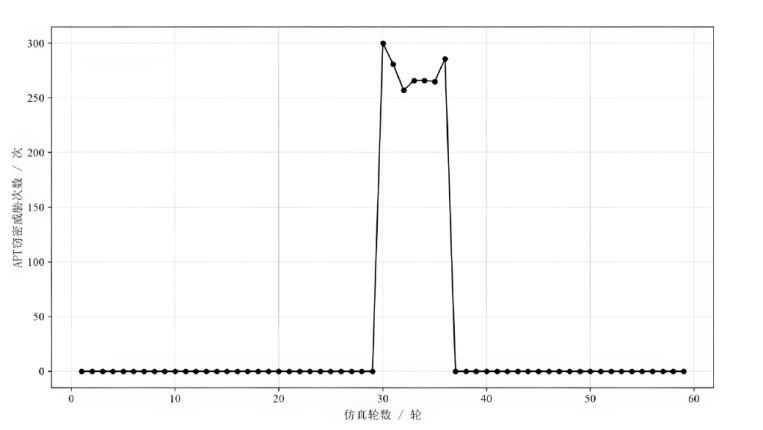
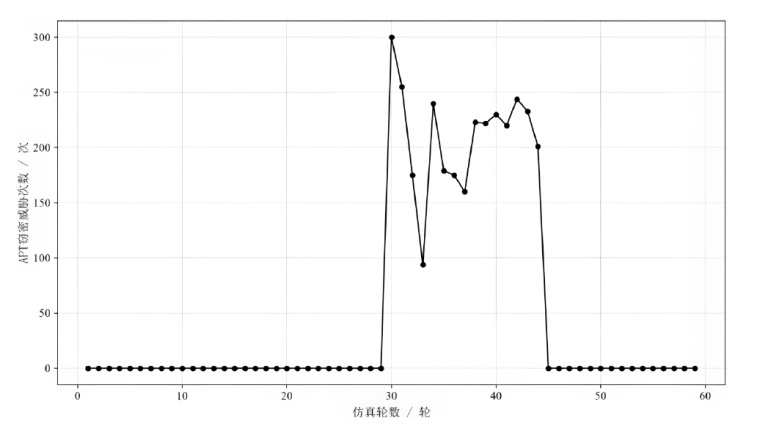
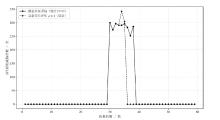
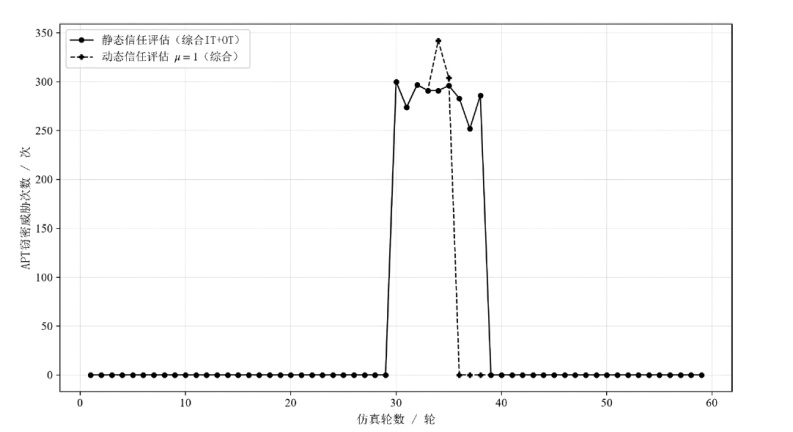
| 检测模式 | 配置说明 | 检测 灵敏度 | 威胁持续时间 | 误报风险 | 适用场景 |
|---|---|---|---|---|---|
| 单域 (仅IT) | 仅用IT域信任值 | 高 | 短 | 中 | 纯IT环境 |
| 单域 (仅OT) | 仅用OT域信任值 | 中 | 长 | 高 | 纯OT环境 |
| 跨域 (IT+OT) | 高且稳定 | 适中 | 低 | 工业互联网 |
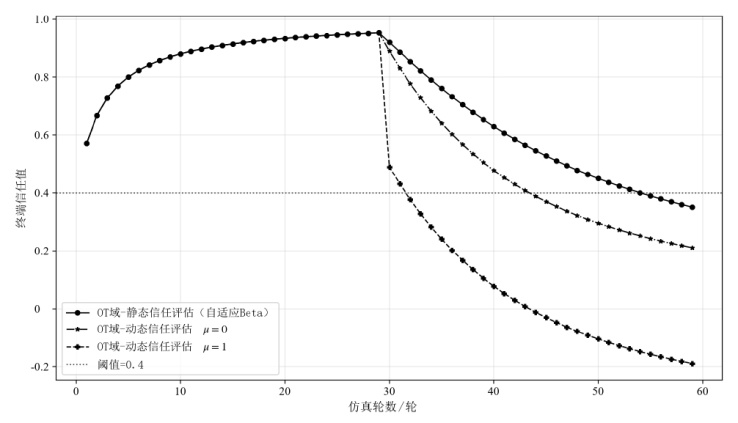
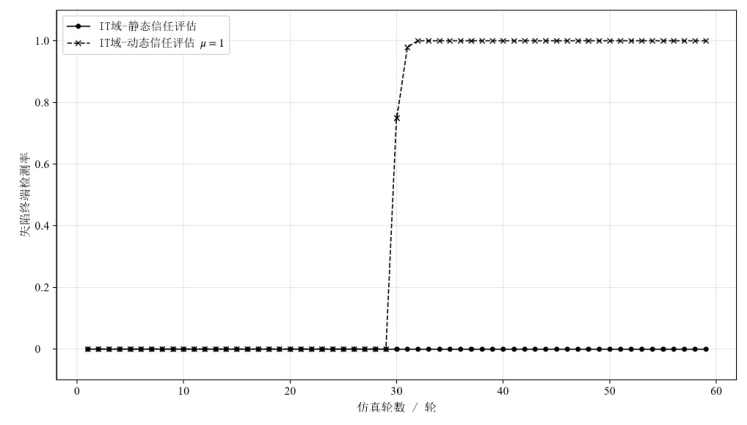

| [1] | 王灏楠. 工业物联网网关系统设计与实现[D]. 天津: 天津大学, 2020. |
| [2] | 祝剑, 杨珍娜, 庞龙, 等. 基于区块链的工业互联网数据溯源方案[J]. 西安邮电大学学报, 2022, 27(2):102-110. |
| [3] | Shi Yuanquan, Li Wei, Zhang Yu, et al. Survey on APT attack detection in industrial cyber-physical system[C]// 2021 International Conference on Electronic Information Technology and Smart Agriculture(ICEITSA). New York: IEEE, 2021: 296-301. |
| [4] | Brown T. The rising threat of cyberattacks on industrial systems[J]. Global Security Journal, 2022, 8(4): 120-135. |
| [5] | 赵新强, 范博, 张东举. 基于威胁发现的APT攻击防御体系研究[J]. 信息网络安全, 2024, 24(7):1122-1128. |
| [6] | Kumar A, Thing V L L. RAPTOR: advanced persistent threat detection in industrial IoT via attack stage correlation[C]// The 20th Annual International Conference on Privacy, Security and Trust (PST). New York: IEEE, 2023: 1-12. |
| [7] | Liu Han, An Baoyu, Yin Yaoyao, et al. A trust evaluation and concept drift-based approach for dynamic APT evasion detection[C]// 2024 IEEE Cyber Science and Technology Congress (CyberSciTech). New York: IEEE, 2024: 544-547. |
| [8] | 邢方圆, 董傲, 孙羽羿, 等. 面向大规模物联网的零信任管理研究综述[J]. 电子学报, 2025, 53(8):2993-3025. |
| [9] | Rose S, Borchert O, Mitchell S, et al. Zero trust architecture: NIST Special Publication 800-207[R]. 2020-08: 1-59. |
| [10] | Fernandez E B, Brazhuk A. A critical analysis of zero trust architecture (ZTA)[EB/OL]. (2024-01-09)[2026-01-04]. https://doi.org/10.1016/j.csi.2024.103832. |
| [11] | Smiliotopoulos C, Kambourakis G, Kolias C. Detecting lateral movement: a systematic survey[EB/OL]. (2024-02-15)[2026-01-04]. https://doi.org/10.1016/j.heliyon.2024.e26317. |
| [12] | Khule M, Motwani D, Chauhan D. Adaptive threat intelligence: an incremental learning approach for detecting evolving APT attacks[C]// International Conference on Advances in Modern Age Technologies for Health and Engineering Science (AMATHE). New York: IEEE, 2025: 1-6. |
| [13] | Zhang Xiaojian, Chen Liandong, FAN Jie, et al. Power IoT security protection architecture based on zero trust framework[C]// The 5th International Conference on Cryptography, Security and Privacy (CSP). New York: IEEE, 2021: 166-170. |
| [14] | 吴克河, 程瑞, 姜啸晨, 等. 基于SDP的电力物联网安全防护方案[J]. 信息网络安全, 2022, 22(2):32-38. |
| [15] | 陈长松. 零信任架构下的数据安全纵深防御体系研究[J]. 信息网络安全, 2021, 21(S1):105-108. |
| [16] | 袁忠, 王勇, 张成. 零信任SDP技术在云桌面系统中的研究与应用[J]. 网络安全技术与应用, 2025, 25(10):82-86. |
| [17] | 马宁. 工业过程控制中的PLC与SCADA系统集成优化[J]. 自动化应用, 2023, 64(21):54-56. |
| [18] | 黄杰, 何城鋆. 基于软件定义边界的服务保护方案[J]. 信息网络安全, 2023, 23(6):1-10. |
| [19] | 许盛伟, 田宇, 邓烨, 等. 基于零信任的大规模车联网安全模型研究[J]. 物联网技术, 2023, 13(10):80-82. |
| [20] | 夏凡, 马骏文, 薛虎虎, 等. 基于多模型融合深度学习算法的文本情感分析模型[J]. 西安邮电大学学报, 2025, 30(5):85-91. |
| [21] | Chen Genwen, Zhou Qingfei, Huang Jie, et al. A multidimensional trust assessment method for zero trust dynamic access control[C]// The 40th Youth Academic Annual Conference of Chinese Association of Automation (YAC). New York: IEEE, 2025: 3170-3176. |
| [22] | 冯景瑜, 王锦康, 张宝军, 等. 基于信任过滤的轻量级加密流量异常检测方案[J]. 西安邮电大学学报, 2023, 28(5):56-66. |
| [23] | Glasser J, Lindauer B. Bridging the gap: a pragmatic approach to generating insider threat data[C]// IEEE Security and Privacy Workshops. New York: IEEE, 2013: 98-104. |
| [24] | Wang Zhiqiang, El S A. DTITD: an intelligent insider threat detection framework based on digital twin and self-attention based deep learning models[J]. IEEE Access, 2023, 11: 114013-114030. |
| [25] | Tao Xiaoling, Liu Jianxiang, Yu Yuelin, et al. An insider threat detection method based on improved test-time training model[EB/OL]. (2025-01-14)[2026-01-04]. https://www.sciencedirect.com/science/article/pii/S2667295224000862. |
| [1] | DENG Dongshang, WANG Weiye, ZHANG Weidong, WU Xuangou. Layered Personalized Federated Learning Guided by Model Feature Orientation [J]. Netinfo Security, 2025, 25(6): 889-897. |
| [2] | ZHANG Xiaojun, ZHANG Nan, HAO Yunpu, WANG Zhouyang, XUE Jingting. Three-Factor Authentication and Key Agreement Protocol Based on Chaotic Map for Industrial Internet of Things Systems [J]. Netinfo Security, 2024, 24(7): 1015-1026. |
| [3] | MA Rupo, WANG Qun, YIN Qiang, GAO Gugang. Analysis of Security Risks and Countermeasures for Modbus TCP Protocol [J]. Netinfo Security, 2024, 24(11): 1710-1720. |
| [4] | WU Kehe, CHENG Rui, JIANG Xiaochen, ZHANG Jiyu. Security Protection Scheme of Power IoT Based on SDP [J]. Netinfo Security, 2022, 22(2): 32-38. |
| [5] | LIU Xin, GUO Zhenbin, SONG Yuchen. An Authentication Scheme Based on SGX for Industrial Internet of Things [J]. Netinfo Security, 2021, 21(6): 1-10. |
| [6] | SHEN Yeming, LI Beibei, LIU Xiaojie, OUYANG Yuankai. Research on Active Learning-based Intrusion Detection Approach for Industrial Internet [J]. Netinfo Security, 2021, 21(1): 80-87. |
| [7] | YU Guo, WANG Chonghua, CHEN Xuehong, LI Jun. Industrial Internet Identifier Resolution Security from the Perspective of Authentication [J]. Netinfo Security, 2020, 20(9): 77-81. |
| [8] | Chonghua WANG, Jun LI, Xuehong CHEN. Research on Industrial Internet Platform Security Protection [J]. Netinfo Security, 2019, 19(9): 6-10. |
| [9] | Yanan CHEN, Qian MEI, Hu XIONG, Weixiang XU. Certificateless Parallel Key-insulated Signature for Industrial Internet of Things [J]. Netinfo Security, 2018, 18(10): 1-9. |
| [10] | LIU Nian, TANG Yi-hong, QI Wei, YANG Yi-xian. Research on Ad-hoc Service Discovery Based on Multi-protocol Framework [J]. Netinfo Security, 2015, 15(10): 40-45. |
| [11] | . Reliability of One-way Transmission System Base on Optical Shutter [J]. , 2010, (12): 0-0. |
| [12] | . NULL [J]. , 2009, 9(10): 0-0. |
| Viewed | ||||||
|
Full text |
|
|||||
|
Abstract |
|
|||||