信息网络安全 ›› 2026, Vol. 26 ›› Issue (6): 899-912.doi: 10.3969/j.issn.1671-1122.2026.06.005
基于迁移学习与改进OpenMax算法的开集射频指纹识别研究
周学广, 赵月, 陈璐( ), 毛贻欢, 焉美爽
海军工程大学信息安全系 武汉 430033
-
收稿日期:2025-09-11出版日期:2026-06-10发布日期:2026-07-27 -
通讯作者:陈璐 E-mail:ieucl@163.com -
作者简介:周学广(1966—),男,江苏,教授,博士,CCF高级会员,主要研究方向为无线通信安全、网络内容安全、基于密码的中文信息处理|赵月(1997—),女,吉林,硕士研究生,主要研究方向为无线通信安全、射频指纹识别|陈璐(1979—),女,广东,副教授,博士,主要研究方向为无线通信安全、可信计算、等级保护|毛贻欢(2001—),女,湖南,硕士研究生,主要研究方向为网络空间安全、云计算安全|焉美爽(1996—),女,辽宁,硕士研究生,主要研究方向为无线通信安全、射频指纹识别 -
基金资助:国家自然科学基金(62276273)
Research on Open-Set Radio Frequency Fingerprint Identification Based on Transfer Learning and Improved OpenMax Algorithm
ZHOU Xueguang, ZHAO Yue, CHEN Lu(), MAO Yihuan, YAN Meishuang
Department of Information Security ,Naval University of Engineering Wuhan 430033, China
-
Received:2025-09-11Online:2026-06-10Published:2026-07-27 -
Contact:CHEN Lu E-mail:ieucl@163.com

摘要:
现阶段,射频指纹识别研究大多基于封闭空间假设,对测试集出现未知样本的情况考虑较少,射频信号往往需要使用高精度接收器进行收集,高质量标记样本获取困难。为此,文章提出一种基于迁移学习与改进OpenMax算法的开集射频指纹识别方法。该方法修改ResNet18网络模型的输入通道以适应频谱图的灰度属性,并在训练过程中对加载的预训练参数进行微调,实现从图像域到频谱图再到信号域上的模型迁移,解决深度学习算法在射频指纹识别应用中存在的样本量需求大和实际获取信号困难的问题。同时,将贝叶斯优化算法引入OpenMax算法,以解决原算法需人工设定置信阈值、尾部数量等多个参数的问题。此外,引入多尺度尾部因子,对不同类别的样本进行自适应分布拟合,进一步提升模型性能。实验结果表明,文章所提方法在不同数量的未知样本下均取得较好的分类识别效果,准确率、召回率和F1分数指标均超过99%,泛化性能良好。
中图分类号:
引用本文
周学广, 赵月, 陈璐, 毛贻欢, 焉美爽. 基于迁移学习与改进OpenMax算法的开集射频指纹识别研究[J]. 信息网络安全, 2026, 26(6): 899-912.
ZHOU Xueguang, ZHAO Yue, CHEN Lu, MAO Yihuan, YAN Meishuang. Research on Open-Set Radio Frequency Fingerprint Identification Based on Transfer Learning and Improved OpenMax Algorithm[J]. Netinfo Security, 2026, 26(6): 899-912.
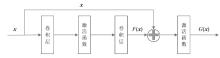
图1
残差模块原理
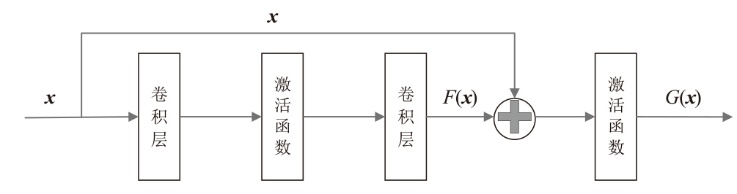

表1
ResNet18网络模型的结构参数
| 网络层 | 卷积核大小/通道 | 步长 | 输出 |
|---|---|---|---|
| 输入 | — | — | 224×224×1 |
| Conv1 | 7×7,64 | 2 | 112×112×64 |
| Maxpool | 3×3,64 | 2 | 56×56×64 |
| 残差层1 | | 1 | 56×56×64 |
| 残差层2 | | 2 | 28×28×128 |
| 残差层3 | | 2 | 14×14×256 |
| 残差层4 | | 2 | 7×7×512 |
| Avgpool | 7×7 | 512 | 1×1×512 |
| 全连接层 | 1×1 | 512 | 分类任务类别数 |
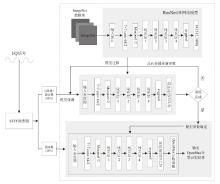
图2
射频指纹识别过程
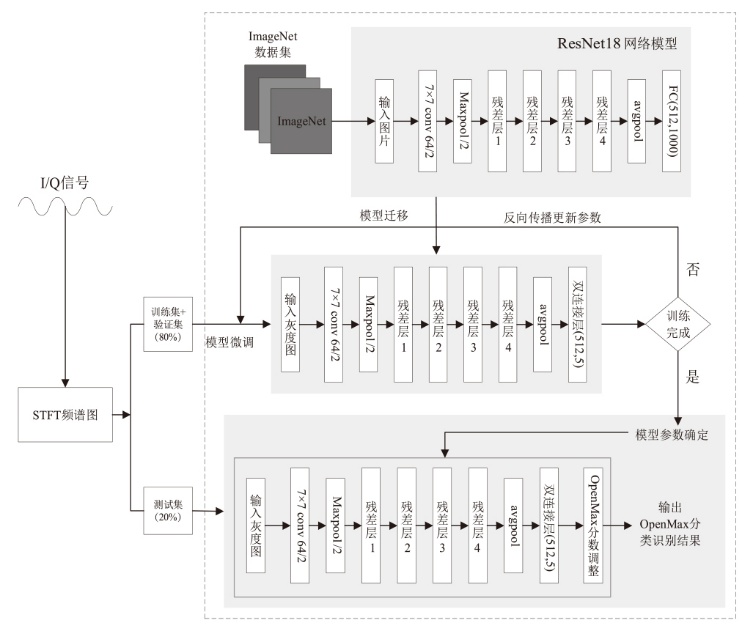
表2
实验环境配置
| 硬件/软件名称 | 规格/版本 |
|---|---|
| CPU | 16核Intel Xeon Gold 6430 |
| GPU | NVIDIA RTX 4090(24 GB显存) |
| 内存 | 120 GB |
| 操作系统 | Ubuntu 22.04 |
| CUDA | 12.4 |
| Python | 3.12 |
| PyTorch | 2.6.0 |
| torchvision | 0.21.0 |
| NumPy | 2.2.4 |
| SciPy | 1.15.2 |
| Matplotlib | 3.10.1 |
| Scikit-learn | 1.6.1 |
| OpenCV | 4.11.0.86 |
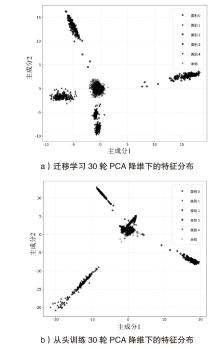
图3
不同方法测试集在PCA降维下的特征分布
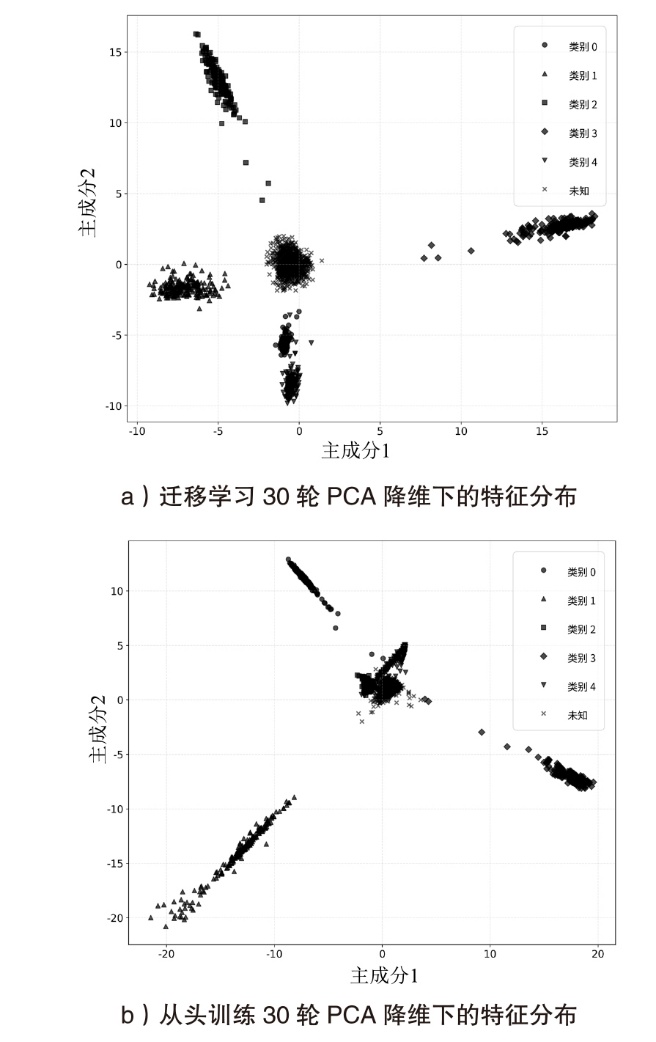
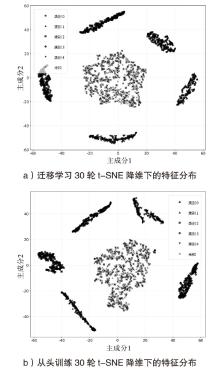
图4
不同方法测试集在t-SNE降维下的特征分布
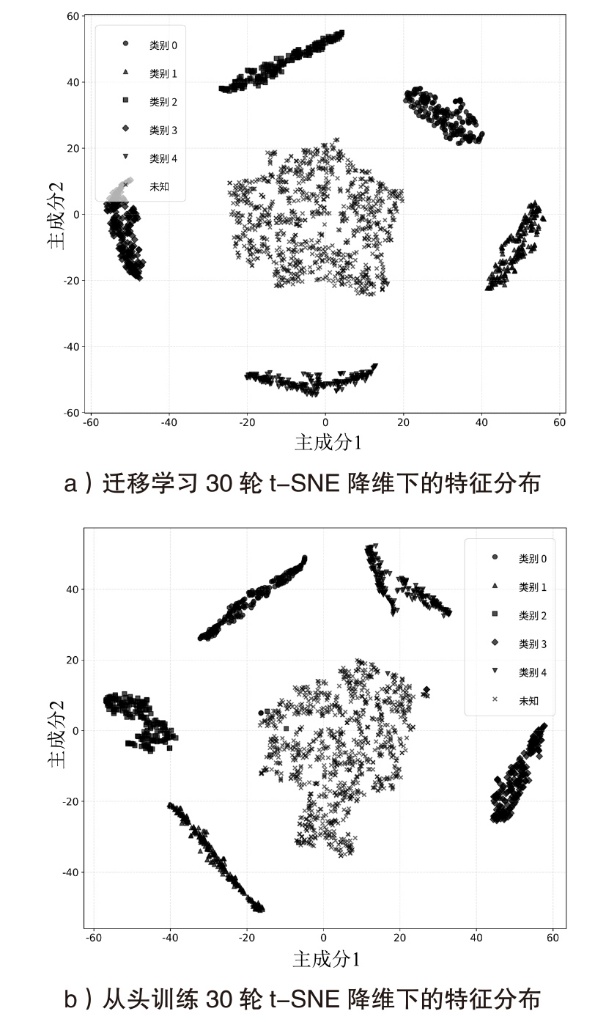
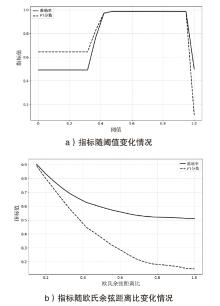
图5
准确率和F1分数随参数变化情况
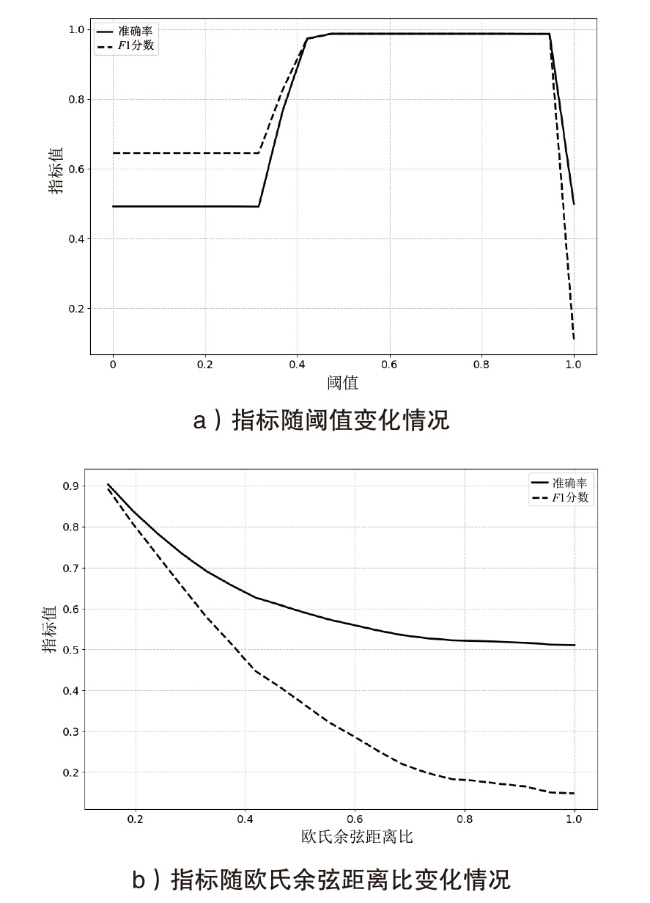
表3
不同数量未知样本下的模型性能
| 方法 | | | ||||
|---|---|---|---|---|---|---|
| 准确率 | F1分数 | 召回率 | 准确率 | F1分数 | 召回率 | |
| ARPL | 96.90% | 94.83% | 96.77% | 95.87% | 94.83% | 96.29% |
| MLS | 96.50% | 94.17% | 96.35% | 95.33% | 94.17% | 95.82% |
| 网格 搜索 | 99.75% | 99.58% | 99.75% | 99.67% | 99.58% | 99.71% |
| 本文 方法 | 99.80% | 99.80% | 99.80% | 99.73% | 99.77% | 99.77% |
| 方法 | | | ||||
| 准确率 | F1分数 | 召回率 | 准确率 | F1分数 | 召回率 | |
| ARPL | 94.83% | 94.83% | 95.03% | 94.36% | 94.83% | 93.32% |
| MLS | 94.17% | 94.17% | 94.43% | 93.64% | 94.17% | 92.59% |
| 网格 搜索 | 99.58% | 99.58% | 99.58% | 99.55% | 99.58% | 99.38% |
| 本文 方法 | 99.83% | 99.83% | 99.83% | 99.82% | 99.83% | 99.75% |
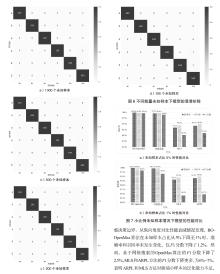
图6
不同数量未知样本下模型的混淆矩阵
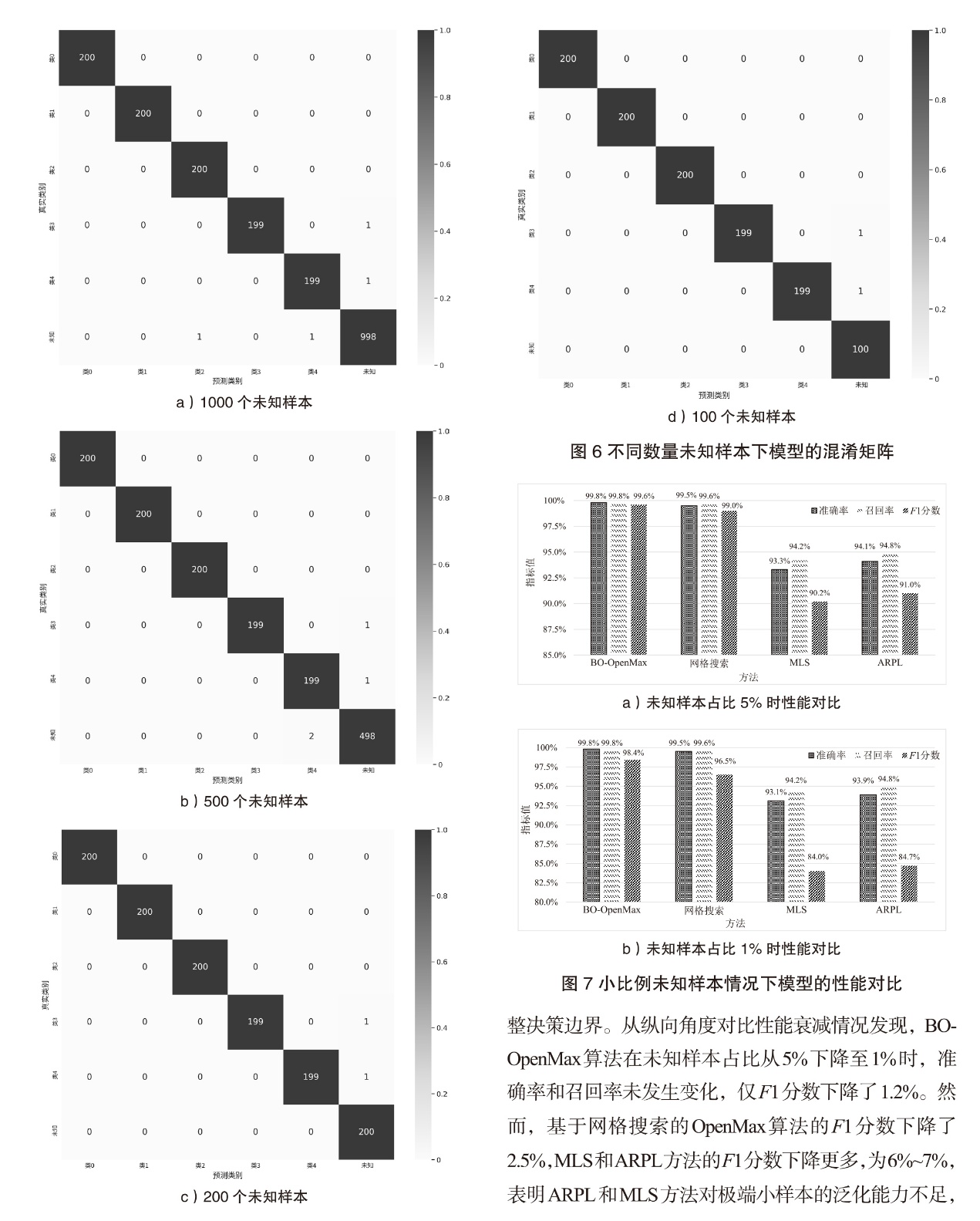
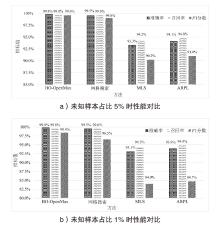
图7
小比例未知样本情况下模型的性能对比
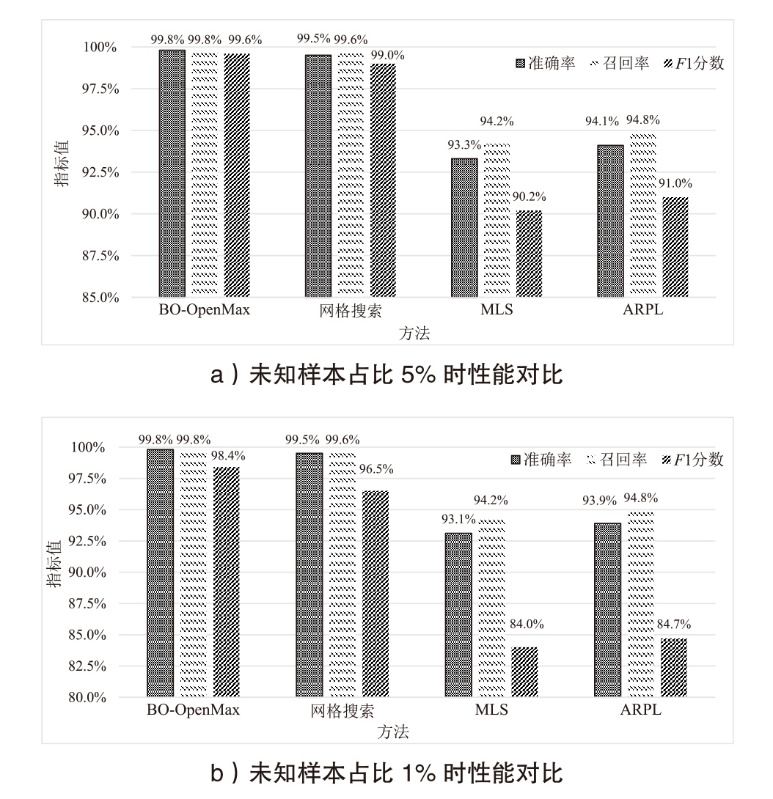
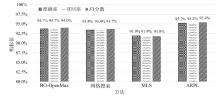
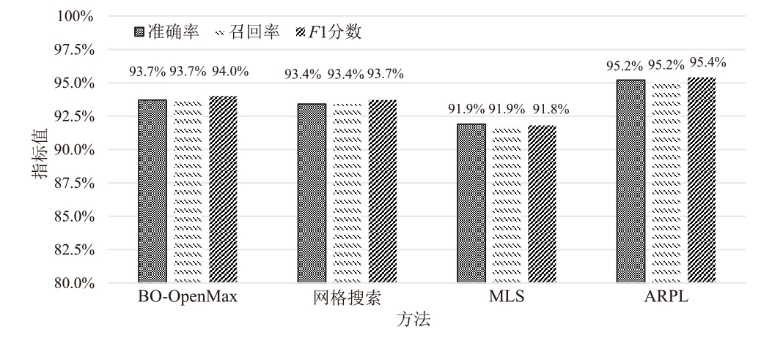
图8
训练测试数据不为同一天时模型性能对比
| [1] | ZHANG Junqing, SHEN Guanxiong, SAAD W, et al. Radio Frequency Fingerprint Identification for Device Authentication in the Internet of Things[J]. IEEE Communications Magazine, 2023, 61(10): 110-115. |
| [2] | WU Chaopeng, CHEN Shiwen, SUN Gangyin, et al. Open Set RF Fingerprint Identification for Wireless Communication Devices[J]. IEEE Wireless Communications Letters, 2025, 14(3): 776-780. |
| [3] | LIU Jue, CHENG Kaixin, YANG Weiwei. Research on Physical Layer Security Technologies for Smart Eavesdropper Attack[J]. Netinfo Security, 2023, 23(2): 45-53. |
| 刘珏, 程凯欣, 杨炜伟. 智能窃听攻击下的物理层安全技术研究[J]. 信息网络安全, 2023, 23(2):45-53. | |
| [4] | HALL J, BARBEAU M, KRANAKIS E. Detection of Transient in Radio Frequency Fingerprinting Using Signal Phase[J]. Wireless and Optical Communications, 2003, 1(1): 13-18. |
| [5] | MOHAMED I S, DALVEREN Y, KARA A. Performance Assessment of Transient Signal Detection Methods and Superiority of Energy Criterion (EC) Method[J]. IEEE Access, 2020, 8: 115613-115620. |
| [6] | ZHUO Fei, HUANG Yuanling, CHEN Jian. Specific Emitter Identification Based on Linear Polynomial Fitting of the Energy Envelope[C]// IEEE. 2016 6th International Conference on Electronics Information and Emergency Communication (ICEIEC). New York: IEEE, 2016: 278-281. |
| [7] | SHI Zhiyuan, LIU Man, HUANG Lianfen. Transient-Based Identification of 802.11b Wireless Device[C]// IEEE. 2011 International Conference on Wireless Communications and Signal Processing (WCSP). New York: IEEE, 2011: 1-5. |
| [8] | LUO Zhenyu, CAO Yunhe, YEO T S, et al. Few-Shot Radar Jamming Recognition Network via Time-Frequency Self-Attention and Global Knowledge Distillation[J]. IEEE Transactions on Geoscience and Remote Sensing, 2023, 61: 1-12. |
| [9] | ZHEN Pan, ZHANG Bangning, CHEN Zhibo, et al. Spectrum Sensing Method Based on Wavelet Transform and Residual Network[J]. IEEE Wireless Communications Letters, 2022, 11(12): 2517-2521. |
| [10] | CAI Zhenxin, WANG Yu, GUI Guan, et al. Toward Robust Radio Frequency Fingerprint Identification via Adaptive Semantic Augmentation[J]. IEEE Transactions on Information Forensics and Security, 2025, 20: 1037-1048. |
| [11] | LI Jianfeng, HUANG Dingkun, YAN Xiaopeng, et al. Low SNR FM Signal Preprocessing Method Based on Low-Order Cyclic Statistics and WVD Distribution[C]// IEEE. 2023 2nd International Conference on Robotics, Artificial Intelligence and Intelligent Control (RAIIC). New York: IEEE, 2023: 258-262. |
| [12] | XIAO Yihan, WANG Boyu, YU Xiangzhen, et al. Radar Emitter Identification Based on Dual Radio Frequency Fingerprint Convolutional Neural Network and Feature Fusion[J]. Journal of Electronics & Information Technology, 2024, 46(8): 3238-3245. |
| 肖易寒, 王博煜, 于祥祯, 等. 基于双路射频指纹卷积神经网络与特征融合的雷达辐射源个体识别[J]. 电子与信息学报, 2024, 46(8):3238-3245. | |
| [13] | MA Jialong, GAO Zhenzhen, MIAO Weijian, et al. Robust RF Fingerprint Identification Scheme Based on Multi-Feature Fusion[C]// IEEE. 2024 IEEE/CIC International Conference on Communications in China (ICCC). New York: IEEE, 2024: 1976-1981. |
| [14] | WANG Min, PENG Linning, XIE Lingnan, et al. Design of Noise Robust Open-Set Radio Frequency Fingerprint Identification Method[C]// IEEE. IEEE INFOCOM 2024-IEEE Conference on Computer Communications Workshops (INFOCOM WKSHPS). New York: IEEE, 2024: 1-6. |
| [15] | SONG Yubo, GENG Yijin, LI Guyue, et al. Identification of LoRa Device Based on Differential Constellation Trace Figure[J]. Netinfo Security, 2021, 21(1): 41-48. |
| 宋宇波, 耿益瑾, 李古月, 等. 基于差分星座轨迹图的LoRa设备识别方法[J]. 信息网络安全, 2021, 21(1): 41-48. | |
| [16] | ZHANG Haotian, ZHAO Lei, JIANG Yuan. Triplet Network and Unsupervised-Clustering-Based Zero-Shot Radio Frequency Fingerprint Identification with Extremely Small Sample Size[J]. IEEE Internet of Things Journal, 2024, 11(8): 14416-14434. |
| [17] | ZHANG Limin, TAN Kaiwen, YAN Wenjun, et al. Specific Emitter Identification Based on Continuous Learning and Joint Feature Extraction[J]. Journal of Electronics & Information Technology, 2023, 45(1): 308-316. |
| 张立民, 谭凯文, 闫文君, 等. 基于持续学习和联合特征提取的特定辐射源识别[J]. 电子与信息学报, 2023, 45(1): 308-316. | |
| [18] | SHEN Guanxiong, ZHANG Junqing, MARSHALL A, et al. Radio Frequency Fingerprint Identification for LoRa Using Deep Learning[J]. IEEE Journal on Selected Areas in Communications, 2021, 39(8): 2604-2616. |
| [19] | LU Qian, YANG Zaikai, ZHANG Hanlin, et al. MRFE: A Deep-Learning-Based Multidimensional Radio Frequency Fingerprinting Enhancement Approach for IoT Device Identification[J]. IEEE Internet of Things Journal, 2024, 11(18): 30442-30454. |
| [20] | JIANG Qi, SHA Jin. Radio Frequency Fingerprint Identification Using Conditional Generative Adversarial Network for SAT-AIS[J]. IEEE Transactions on Aerospace and Electronic Systems, 2025, 61(1): 593-602. |
| [21] | ZENG Yuan, GONG Yi, LIU Jiawei, et al. Multi-Channel Attentive Feature Fusion for Radio Frequency Fingerprinting[J]. IEEE Transactions on Wireless Communications, 2024, 23(5): 4243-4254. |
| [22] | GRITSENKO A, WANG Zifeng, JIAN Tong, et al. Finding a ‘New’ Needle in the Haystack: Unseen Radio Detection in Large Populations Using Deep Learning[C]// IEEE. 2019 IEEE International Symposium on Dynamic Spectrum Access Networks (DySPAN). New York: IEEE, 2019: 1-10. |
| [23] | HANNA S, KARUNARATNE S, CABRIC D. Open Set Wireless Transmitter Authorization: Deep Learning Approaches and Dataset Considerations[J]. IEEE Transactions on Cognitive Communications and Networking, 2021, 7(1): 59-72. |
| [24] | YANG Tianwen, ZHAO Jianing, WANG Xin, et al. Deep Learning Based RFF Recognition with Differential Constellation Trace Figure towards Closed and Open Set[C]// IEEE. 2022 IEEE/CIC International Conference on Communications in China (ICCC). New York: IEEE, 2022: 908-913. |
| [25] | SHEN Guanxiong, ZHANG Junqing, MARSHALL A, et al. Towards Scalable and Channel-Robust Radio Frequency Fingerprint Identification for LoRa[J]. IEEE Transactions on Information Forensics and Security, 2022, 17: 774-787. |
| [26] | SHEN Guanxiong, ZHANG Junqing, MARSHALL A. Deep Learning-Powered Radio Frequency Fingerprint Identification: Methodology and Case Study[J]. IEEE Communications Magazine, 2023, 61(9): 170-176. |
| [27] | WANG Xiang, WANG Qunke, FANG Lanting, et al. Radio Frequency Fingerprint Authentication Based on Feature Fusion and Contrastive Learning[EB/OL]. (2024-12-01)[2025-08-11]. https://dl.acm.org/doi/10.1016/j.eswa.2024.124537. |
| [28] | BENDALE A, BOULT T E. Towards Open Set Deep Networks[C]// IEEE. 2016 IEEE Conference on Computer Vision and Pattern Recognition (CVPR). New York: IEEE, 2016: 1563-1572. |
| [29] | HANNA S, KARUNARATNE S, CABRIC D. WiSig: A Large-Scale WiFi Signal Dataset for Receiver and Channel Agnostic RF Fingerprinting[J]. IEEE Access, 2022, 10: 22808-22818. |
| [30] | HE Kaiming, ZHANG Xiangyu, REN Shaoqing, et al. Deep Residual Learning for Image Recognition[C]// IEEE. 2016 IEEE Conference on Computer Vision and Pattern Recognition (CVPR). New York: IEEE, 2016: 770-778. |
| [31] | HU Hong. Research on Open Set Recognition Algorithm for Typical Signal Modulation[D]. Chengdu: University of Electronic Science and Technology of China, 2024. |
| 胡鸿. 典型信号调制方式开集识别算法研究[D]. 成都: 电子科技大学, 2024. | |
| [32] | CHEN Guangyao, PENG Peixi, WANG Xiangqian, et al. Adversarial Reciprocal Points Learning for Open Set Recognition[J]. IEEE Transactions on Pattern Analysis and Machine Intelligence, 2022, 44(11): 8065-8081. |
| [33] | VAZE S, HAN Kai, VEDALDI A, et al. Open-Set Recognition: A Good Closed-Set Classifier is All You Need[EB/OL]. (2022-01-29)[2025-08-11]. https://openreview.net/forum?id=5hLP5JY9S2d |
| [1] | 易文哲, 徐枭洋, 石磊, 庄泳, 王鹃. 基于知识迁移和冻结的模型反演防御方法[J]. 信息网络安全, 2026, 26(4): 566-578. |
| [2] | 叶桓荣, 李牧远, 姜波. 基于迁移学习和威胁情报的DGA恶意域名检测方法研究[J]. 信息网络安全, 2023, 23(10): 8-15. |
| [3] | 徐硕, 张睿, 夏辉. 基于数据属性修改的联邦学习隐私保护策略[J]. 信息网络安全, 2022, 22(1): 55-63. |
| [4] | 郭春, 陈长青, 申国伟, 蒋朝惠. 一种基于可视化的勒索软件分类方法[J]. 信息网络安全, 2020, 20(4): 31-39. |
| [5] | 王伟, 沈旭东. 基于实例的迁移时间序列异常检测算法研究[J]. 信息网络安全, 2019, 19(3): 11-18. |
| [6] | 杨元原, 陆臻, 顾健. RFID安全协议追踪攻击的形式化分析[J]. 信息网络安全, 2015, 15(9): 25-28. |
| 阅读次数 | ||||||
|
全文 |
|
|||||
|
摘要 |
|
|||||